
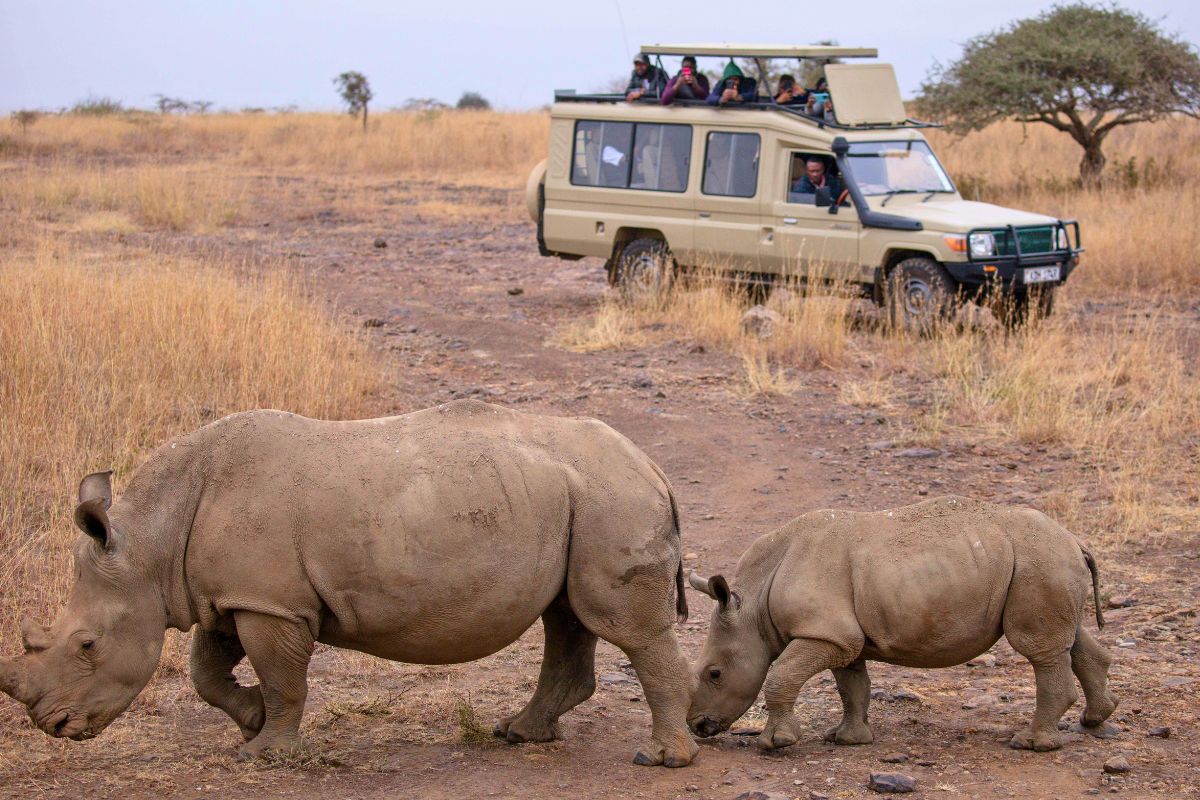
There is no single best time to visit East Africa for a safari. The right month depends on what you want to see and which country you’re heading to.
In short: July to October is the classic dry-season window for the great herds and the Maasai Mara river crossings in Kenya and Tanzania, but it is also the busiest and most expensive period. January and February bring the calving season on the southern Serengeti plains, with superb wildlife, clear skies and fewer people. March to May is the green low season, being lush, quiet and generally the cheapest time to go.
For gorilla trekking in Rwanda and Uganda, the drier months of June to September and December to February generally offer the easiest trail conditions.
This guide covers Kenya, Tanzania, Uganda and Rwanda month by month, helping you understand what each season means for your trip and choose the time that works best for what you want to see.
We drive Kenya and Tanzania’s parks throughout the year and work across the wider region. Below, we break the year down month by month.
What are East Africa’s safari seasons?
East Africa sits on the equator, so it doesn’t have summer and winter in the way travellers from the UK, US, Canada or Australia may be used to. Instead, the year is shaped by two rainy periods and two drier ones.
- The long dry season (roughly late June to October). This is peak safari season. Sparse vegetation and shrinking water sources make animals easier to spot, and this is also when the famous Mara River crossings take place. Expect the highest prices and the busiest camps.
- The short rains (roughly November to mid-December). These are usually brief afternoon showers rather than all-day rain. The landscape greens up, migratory birds arrive, and crowds and prices ease. It can be a good option if you want fewer crowds and better value.
- The short dry season (late December to February/March). Hot, mostly dry and excellent for wildlife. This is calving season on the southern Serengeti, and one of the better periods for clear Kilimanjaro views from Amboseli.
- The long rains (roughly March to May). This is the green, lower-cost season. The landscape is green and lush, wildlife is still present, and rates can drop significantly. Some seasonal camps close and a few roads become muddy.
East Africa safari by month: a quick-reference table
| Month/ Weather | Wildlife highlight | Crowds, price & value | |
|---|---|---|---|
| January Hot, mostly dry | Calving building on southern Serengeti; clear Kilimanjaro from Amboseli | Moderate Best value + big cats | |
| February Hot, dry | Peak calving; intense predator action | Moderate Best value big-game month | |
| March Long rains begin | Herds in central Serengeti; lush plains | Low, prices dropping Green season starts | |
| April Wettest month | Newborn animals, excellent birding | Lowest of the year Cheapest, quietest | |
| May Rains tailing off | Herds moving north and west | Low Late green-season value | |
| June Drying out | Grumeti crossings begin | Shoulder, rising Good value before peak season | |
| July Dry, cool mornings | Mara River crossings start | High, book early Crossings begin | |
| August Dry, dusty | Most reliable Mara crossings | Peak, highest Classic migration trip | |
| September Dry | Crossings continue; strong predator sightings | Peak Migration with slightly fewer crowds | |
| October Dry, warming | Late crossings; herds start drifting south | High, easing late month End-of-season value | |
| November Short rains | Green flush; herds returning to Serengeti | Low–moderate Quiet, good value, birding | |
| December Short rains early; drier late | Herds arriving in southern Serengeti | Festive peak late December Festive travel + calving lead-up |
June is the last month before Maasai Mara gate fees rise for high season, more on that under costs below.
Heading to Rwanda or Uganda for gorillas or a savanna safari? Those two countries follow a similar rhythm, drier and generally easier in June to September and December to February, and greener and wetter from March to May and October to November. See the dedicated section further down.
Month-by-month breakdown
January
January is a good all-round month for an East Africa safari.
The short dry season means good game viewing across Kenya’s parks, and the skies over Amboseli are often clear enough for those well-known views of elephants with Mount Kilimanjaro in the background.
In the southern Serengeti and Ndutu, the wildebeest are on the short-grass plains and calving is beginning. It is warm, the conditions are generally good, and prices are noticeably lower than during the July to October peak.
January also falls within the short dry season for Rwanda and Uganda, making it one of the better months for gorilla trekking and drier forest trails.
February
If you want big cats, February is one of the best months of the year.
Calving peaks on the southern Serengeti plains. Hundreds of thousands of wildebeest give birth over a relatively short period, and where there are newborn animals, there are lions, cheetahs and hyenas.
It is generally dry and clear, while still being well outside peak-season pricing. It is a particularly good option if you want excellent wildlife without travelling during the busiest safari months.
March
The long rains usually arrive from mid-to-late March, and with them the green season begins.
The herds are still moving through the central Serengeti, the plains become greener, and prices start to fall as crowds thin out.
Gorilla trekking in Rwanda and Uganda is still very much possible, although the trails become muddier.
March can be a good month for travellers who don’t mind some rain and would rather see fewer vehicles around wildlife sightings.
April
April is generally the wettest and quietest month.
This is the deep green season, with lush landscapes, newborn animals and excellent birding as migratory species arrive.
It is also usually the cheapest time to go on safari. The trade-off is occasional heavy showers and muddy roads. A few seasonal camps may also close for maintenance, so itineraries need a little more care.
But if you are flexible and your priority is getting more safari for your money, April can be worth considering. You will generally encounter far fewer visitors in the parks.
May
The rains start to ease through May, while green-season rates may still apply, making it another quiet and good-value period.
The herds are moving north and west through the Serengeti in the build-up to the crossing months.
If you don’t mind occasional rain and would prefer fewer vehicles around wildlife sightings, late May can be a good option.
June
June is one of the months we often recommend to travellers looking for a good balance between wildlife, weather and cost.
The land is drying out, game viewing is becoming easier, and the first river crossings of the migration begin in the Serengeti’s western corridor at the Grumeti.
June also falls just before the July crowd surge and before Maasai Mara gate fees rise for high season. You can experience very good safari conditions without paying full peak-season prices.
June also marks the start of the long dry season in Rwanda and Uganda. It is a popular period for gorilla trekking, so permits for these dates can book up early.
July
Peak season begins.
As the plains dry, the herds move into the northern Serengeti and the Maasai Mara, and the famous Mara River crossings begin.
This is the trip many people picture when they imagine an African safari. It is spectacular, but it is also busy and expensive, so the best camps can book out months ahead.
If July is your window, plan early.
August
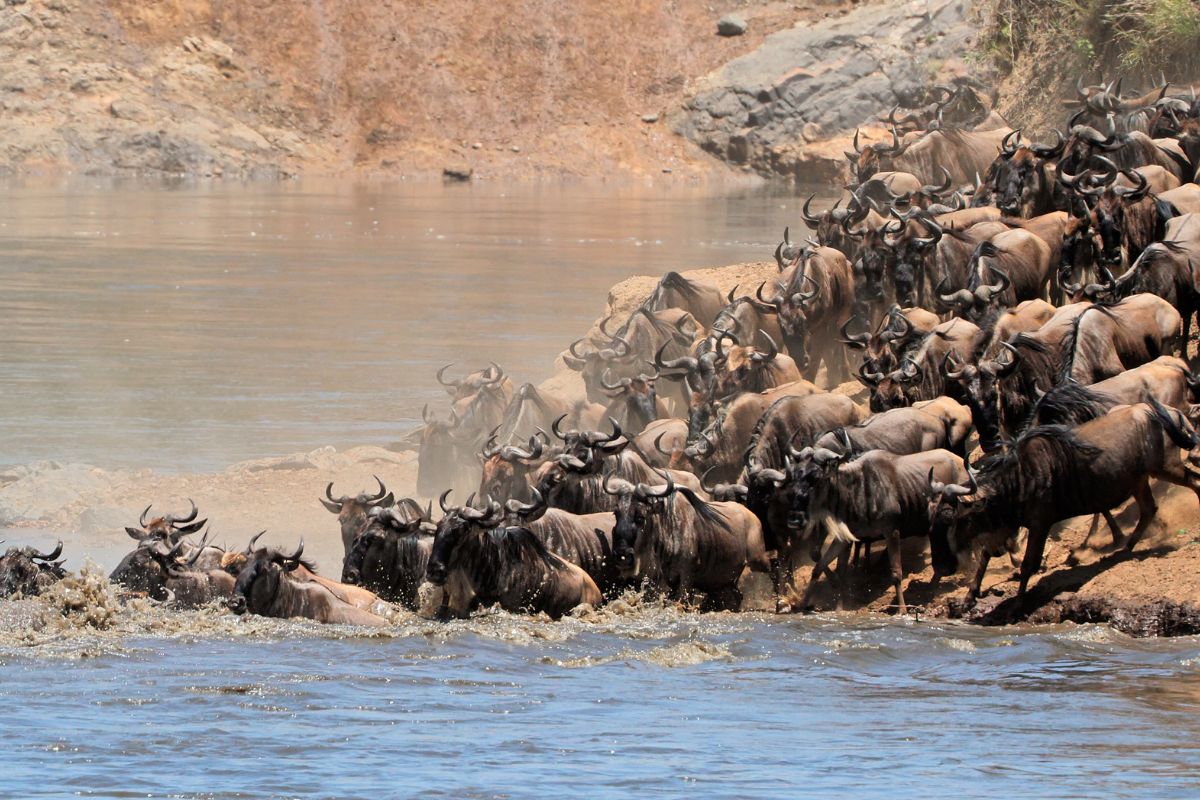
August is the heart of the migration season and one of the most reliable times to see activity around the Mara River.
Large numbers of wildebeest may gather around the river, and when a crossing happens, it can be an incredible sight.
It is also one of the busiest and most expensive months of the year across the Mara.
If seeing a Mara River crossing is one of the main reasons for your trip, August is one of the strongest months to consider. Just be prepared for higher prices, more visitors and more vehicles around popular sightings.
September
Crossings can continue and game viewing remains excellent.
Skies are generally clear, mornings are cool and predator sightings are often very good.
It is a good option if you want to experience the migration but would prefer to avoid travelling during the busiest part of August.
October
October is the tail end of the dry season.
Early October can still deliver Mara River crossings, and as the month goes on, the herds begin drifting back south towards the Serengeti.
Crowds start to ease and some rates may soften, which can make late October a good option for travellers who still want strong wildlife viewing but would prefer slightly fewer crowds.
November
The short rains arrive, usually as brief afternoon showers rather than all-day rain.
The landscape becomes green again, the herds move back towards the southern Serengeti and migratory birds return.
Crowds and prices drop.
November can be a very good option for travellers who want good wildlife, greener landscapes and better value, and who don’t mind occasional rain.
December
Early December often continues the short rains and remains relatively quiet and green.
From around the third week of December, however, the festive period brings a sharp increase in demand and rates. Christmas and New Year departures can book out early and cost more.
Wildlife-wise, it is a good all-round period. The herds are arriving on the southern Serengeti plains and calving season is approaching.
When is the Great Migration and where?
One of the biggest misconceptions about the Great Migration is that it only happens in July in the Maasai Mara.
In reality, it is a year-round, roughly circular movement of well over a million wildebeest and zebra through the Serengeti-Mara ecosystem.
Where the herds are depends on the month:
- December to March – southern Serengeti and Ndutu: The herds gather on the short-grass plains, and calving peaks in late January and February.
- April to May – central and western Serengeti: The herds move north and west through the long rains.
- June to July – western corridor: The first major river crossings begin at the Grumeti.
- July to October – northern Serengeti and Maasai Mara: This is the period associated with the famous Mara River crossings, which are generally most reliable from around August into September.
- November – heading south again: The short rains draw the herds back towards the Serengeti to begin the cycle again.
There are two important things to keep in mind.
First, the migration follows the rains, not a calendar. Exact timing shifts from year to year, and no operator can promise a river crossing on a specific date.
Second, you can experience the migration more quietly and often at a lower cost outside July to October. Calving season in February can be just as exciting for travellers who enjoy wildlife action, while generally being quieter and less expensive than the peak migration months.
When is the best time to visit Rwanda and Uganda?
Rwanda and Uganda follow a similar seasonal rhythm. There are two drier periods – June to September and December to February – and two wetter periods from March to May and October to November.
Both are year-round destinations, so the season affects trail conditions, crowds and sometimes costs more than whether you can visit at all.
Gorilla and primate trekking
Mountain gorilla trekking takes place throughout the year in Rwanda’s Volcanoes National Park and Uganda’s Bwindi Impenetrable Forest.
The drier months generally mean firmer trails and easier hiking. They are also the most popular periods, so permits for these dates can sell out months ahead.
The green season is muddier and more demanding underfoot, but you may share the forest with fewer people and permits can be easier to secure.
One thing worth knowing is that chimpanzee tracking in Uganda’s Kibale Forest and Rwanda’s Nyungwe can sometimes be better in wetter periods, when chimpanzees may forage lower and closer to the trails.
Savanna safaris beyond the gorillas
Both countries offer much more than primate trekking.
Uganda’s savanna parks – including Queen Elizabeth, Murchison Falls and Kidepo Valley – offer classic big-game viewing. They are generally at their best during the dry months when vegetation is thinner and animals gather around water sources.
Rwanda’s Akagera National Park is also a Big Five park and follows a similar pattern: dry season can be better for game drives, while the green season offers lush landscapes, birding and newborn animals.
This means Rwanda and Uganda can work as complete safari destinations, rather than simply being added onto a gorilla trekking itinerary.
Permits, timing and cost
A Rwanda gorilla permit is US$1,500 per person and a Uganda permit is US$800, both for international non-residents.
Rwanda has also offered a low-season permit discount for travellers who combine gorilla trekking with stays in destinations such as Akagera or Nyungwe. Because permit rules and discounts can change, always confirm the current terms before booking.
Uganda’s permit price does not normally vary by season.
Because gorilla trekking pairs naturally with a Kenyan or Tanzanian safari, the best time to trek often comes down to how it fits with the rest of your trip.
The June to September dry window overlaps with the Mara migration season, while December to February can work well for combining a drier trek with a calving-season safari.
When is the cheapest time for an East Africa safari?
The cheapest time to go is generally the green low season – roughly March to May, with April often being the lowest-priced period.
Lodge and camp rates fall, parks are quieter and the landscape is at its greenest.
The trade-offs are straightforward: occasional heavy showers, some muddy roads and a few seasonal camps closing during the wettest weeks.
Timing can also affect park fees, not just accommodation costs.
For example, in 2026, the non-resident adult gate fee for the Maasai Mara is US$100 per day from January to June and US$200 per day from July to December.
Over a multi-day stay in the Mara, that difference can add up quickly.
This is one reason we often point value-focused travellers towards late June or February. You can get excellent wildlife viewing without paying the full peak-season premium on both accommodation and gate fees.
What about weather, roads and health by season?
During the dry months, particularly late June to October and to a lesser extent January and February, roads are generally firmer and easier to navigate.
Dust can be the main nuisance, and mornings can be genuinely cold on an open game drive, so bring layers rather than packing only for hot weather.
During the green season, showers often come in short bursts, sometimes in the late afternoon. The bigger practical issue in some areas is muddy tracks, which is where an experienced guide becomes important.
East Africa’s safari regions are malaria-risk areas, so anti-malarial precautions and insect protection can be important throughout the year. Mosquito activity may be higher during and after the rains.
This is general travel information rather than medical advice. Travellers should confirm current health requirements and speak to a qualified travel clinic before departure.
Frequently asked questions
What is the overall best month for an East Africa safari?
For first-time visitors who want the big herds and Mara River crossings, August and September are among the best months to consider, although they are also the busiest and most expensive.
For a balance of excellent wildlife, good weather, fewer crowds and lower costs, February and late June are strong options.
Can you see the Great Migration outside July to October?
Yes. The herds move throughout the year.
From December to March, they are mainly in the southern Serengeti, with calving peaking in February.
The July to October river crossings are the most famous part of the migration, but they are only one chapter of a year-round journey.
Is the green season worth it?
For many travellers, absolutely.
March to May can offer lower prices, fewer crowds, green landscapes and excellent birding.
The trade-off is rain, muddy roads and a few seasonal camp closures. If your priority is value and fewer visitors rather than guaranteed dry weather, it can be a smart choice.
When is the best time for gorilla trekking?
June to September and December to February generally offer the driest trails and easier hiking conditions, but they are also the busiest periods for permits.
The rainy months can be muddier but quieter, with easier permit availability. Many travellers simply choose their trekking dates around the rest of their East Africa itinerary.
Is it cheaper to visit in the low season?
Yes, usually much cheaper.
Green-season lodge and camp rates can be lower, and in the Maasai Mara the park gate fee is also lower before July.
For budget-conscious travellers, the January to June period can offer significant savings compared with the main peak-season months.
Not sure which month is right for your safari?
Don’t choose your safari month simply because someone tells you it is “the best time”.
Think about what matters most to you. Do you want to see the migration? Are you hoping for fewer crowds? Is budget your main priority? Do you want to combine your safari with gorilla trekking or a beach holiday?
Once you know what matters most, it becomes much easier to choose the right time for your trip.
Not sure which month fits the safari you have in mind? We are happy to talk through the options for your dates, migration versus calving season, peak versus green season, and how to get the best safari experience for your budget.
Get in touch with our team and we’ll help you choose the right time to go.