
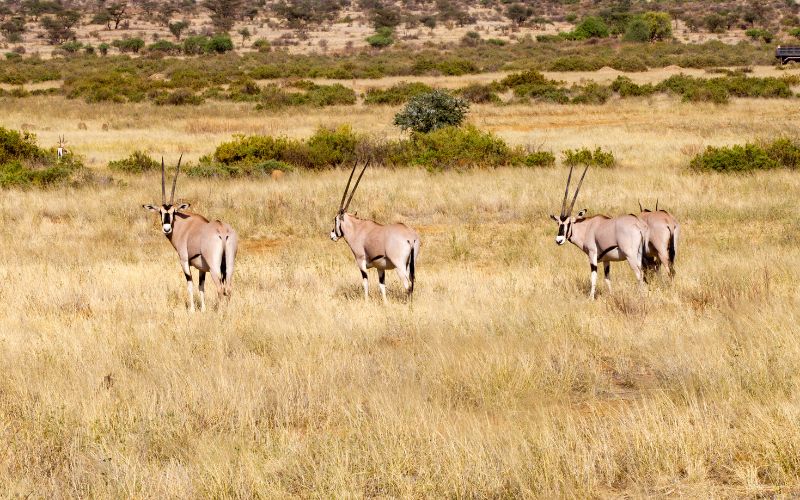
Samburu National Reserve in northern Kenya is the country’s best park for wildlife. It is known for the Samburu Special Five, comprising Grevy’s zebra, reticulated giraffe, Beisa oryx, gerenuk and Somali ostrich and big elephant herds that come down to drink and bathe in the Ewaso Ng’iro River. Add reliable leopard sightings, red-earth semi-desert scenery and far fewer vehicles than the Masai Mara, and Samburu becomes the natural second chapter of a Kenya safari.
This guide covers what you’ll actually see, what it costs, when to go, how to get there, where to stay and who Samburu suits best.
What is Samburu National Reserve known for?
Samburu is a compact reserve of roughly 165 square kilometres on the northern bank of the Ewaso Ng’iro River, about 350 km north of Nairobi. Across the river lies Buffalo Springs National Reserve, and to the east Shaba National Reserve. Together they form one connected ecosystem, and most safaris explore at least two of the three.
The reserve sits just north of the equator in hot, dry country. That dryness is the whole point. Animals that cannot survive in the wetter south thrive here, which is why Samburu is the easiest place in Kenya to tick off the Special Five in a single game drive.
The river is the reserve’s lifeline. In the dry months almost all the wildlife, elephants, zebras, giraffes, lions, crocodiles are drawn to its banks, concentrating the game viewing along a relatively small strip. Samburu is also home to the Samburu people, pastoralists closely related to the Maasai, whose red cloth, beadwork and camels are part of the landscape.
With doum palms along the river, acacia scrub, rocky outcrops and dusty red tracks, and Mount Kenya visible to the south on a clear morning.
What are the Samburu Special Five?
The Special Five are five dry-country species that are common in Samburu but rare or absent in Kenya’s southern parks. Spotting all five is a realistic goal on a two- or three-night stay.
Grevy’s zebra
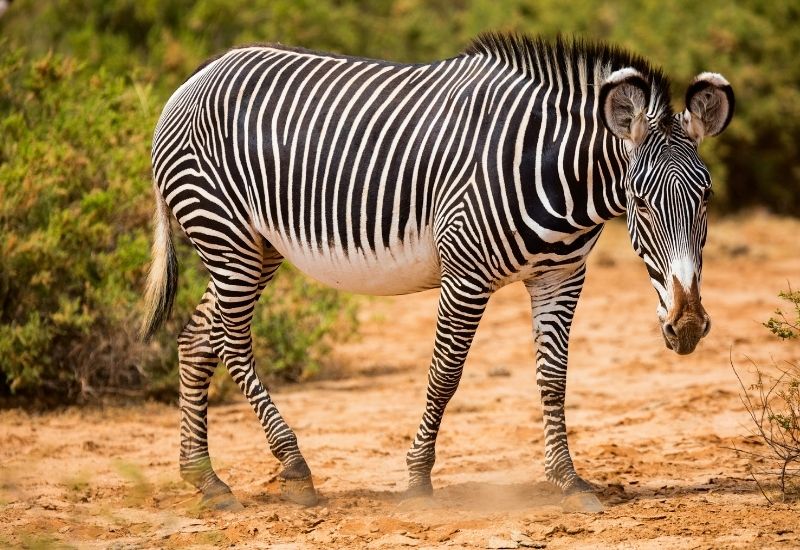
The largest and rarest zebra in the world. Compared with the common plains zebra, it is taller, with narrow, tightly packed stripes, a white belly and large rounded ears. It is an endangered wildlife species, whereby Kenya’s 2025 National Wildlife Census counted about 2,465 animals, and almost all of the world’s population lives in northern Kenya and a few pockets of southern Ethiopia.
Reticulated giraffe
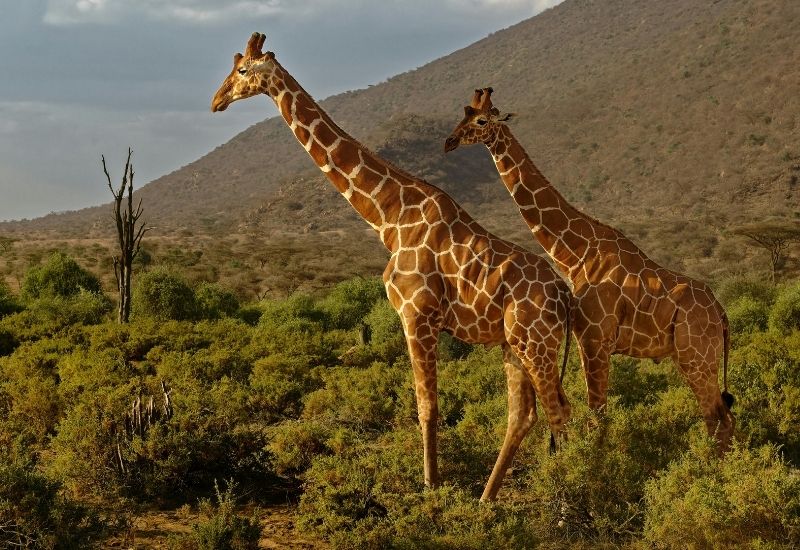
The most striking giraffe in Africa, with clean, chestnut patches outlined in bright white lines, like a net. The Maasai giraffe you’ll see in the Mara has ragged, blotchy markings by comparison. In Samburu, reticulated giraffes are common, especially in the acacia woodland.
Beisa oryx
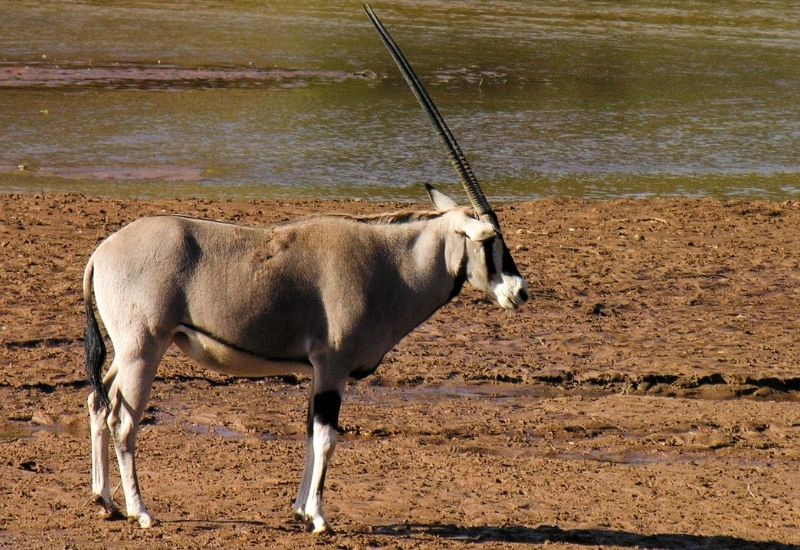
A desert antelope built for heat, with long straight horns and bold black-and-white face markings and can go long periods without drinking. Look for it on the open, dry plains away from the river.
Gerenuk
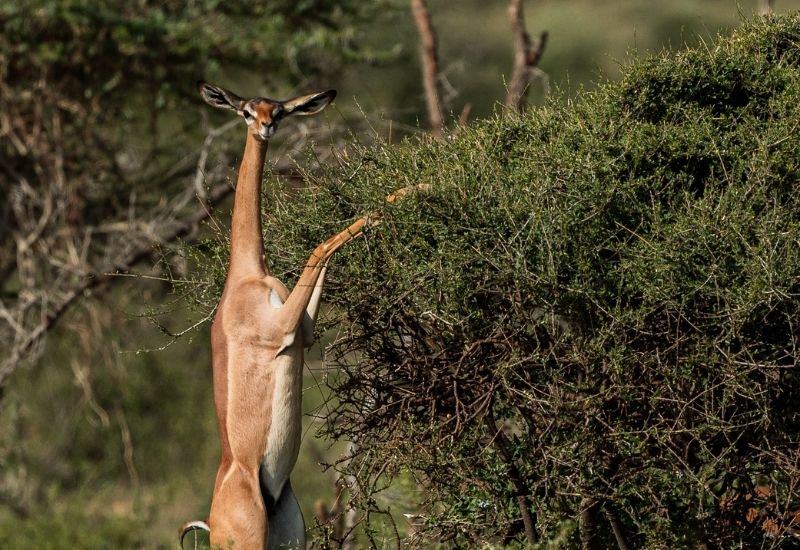
The oddest of the five, and many guests’ favourite. Its name comes from the Somali word for “giraffe-necked.” Gerenuks stand upright on their hind legs to browse leaves other antelopes cannot reach, and they rarely need to drink at all.
Somali ostrich
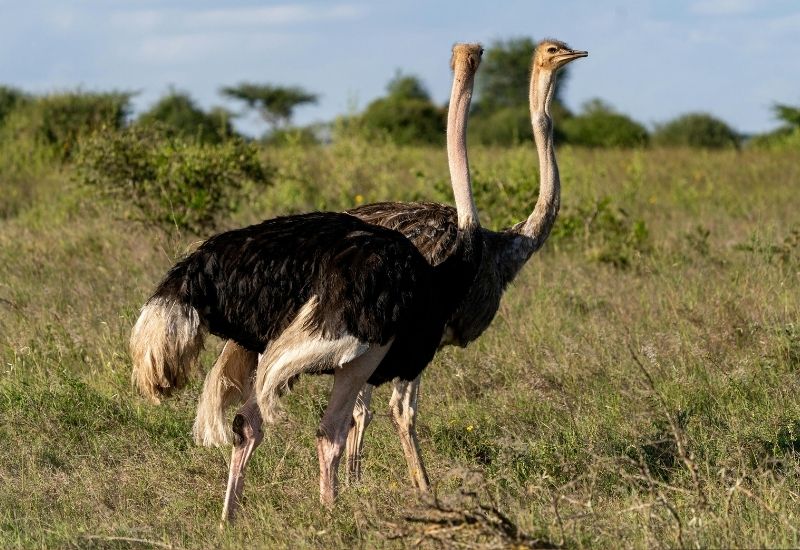
The males have blue-grey skin on the neck and thighs, unlike the pinkish tones of the Maasai ostrich further south. It was recognised as a separate species in 2014. The colour deepens in breeding season, which makes them easy to identify.
What else will you see on a Samburu game drive?
The Special Five are the headline, but they are not the only reason to come. Samburu delivers classic safari drama too, often with fewer vehicles around each sighting.
Elephants along the Ewaso Ng’iro
The wider Samburu–Laikipia region holds Kenya’s second-largest elephant population. In the reserve, family herds cross the river, dust-bathe in the red earth and dig for water in the dry sandbed. The herds here are among the most studied in Africa, as the research charity Save the Elephants has worked in Samburu for decades. Midday at the river, when herds come down to drink, is one of the best hours of any Samburu safari.
Leopards, lions and cheetahs
Samburu has a strong reputation for leopards, which rest in riverside trees and on rocky outcrops. Lions are present and regularly seen. Cheetahs are less predictable but turn up on the open plains. Samburu’s lions have a famous story: in 2002 a lioness named Kamunyak “adopted” a series of oryx calves, a case that drew worldwide attention.
River life and birds
Large Nile crocodiles bask on the riverbanks, and hippos occupy the deeper pools. Birders will find around 450 recorded species. Look for the vulturine guineafowl, with its cobalt-blue chest, which is one of the area’s signature birds.
Samburu is often paired with Ol Pejeta or Lewa in Laikipia, a short drive or flight away, for the rhino, completing the sightings of the BIG FIVE.
What else is there to do in Samburu?
Inside the national reserve, game drives are the main activity. The bigger range of experiences sits in the community conservancies that border the reserve, such as Kalama, Westgate and Namunyak. Where you stay decides what you can do.
- Reteti Elephant Sanctuary. In Namunyak Conservancy, Reteti is Africa’s first community-owned elephant sanctuary, opened in 2016. Samburu keepers, many of them women, raise orphaned calves for release back into the wild. Visits are small and booked ahead, with a modest fee that funds the sanctuary. Allow a half-day excursion.
- Samburu village visits. A visit to a manyatta (homestead) offers a look at Samburu dress, song, livestock culture and daily life. Choose a visit arranged through your lodge or a conservancy, so the fee reaches the community.
- Walking safaris. Guided bush walks with Samburu warriors and armed rangers are possible in the conservancies, not inside the reserve itself.
- Night game drives. Also a conservancy-only activity. Look for aardwolf, genets, bush babies and leopards on the move.
- Camel walks. A slow, memorable way to see dry country, offered by several lodges and conservancies.
- Bush breakfasts and sundowners on the riverbank or a rocky outcrop with views toward Mount Kenya.
This is why we suggest at least two to three nights. That gives you time for river game drives, a conservancy walk or night drive, and a Reteti visit without rushing.
When is the best time to visit Samburu?
The short answer: the long dry season, June to October, is the best time for game viewing, with January to February a close second. As waterholes dry up, animals concentrate along the Ewaso Ng’iro, so sightings are dense and predictable.
Samburu is semi-arid, so even its rainy seasons are lighter than in southern Kenya. Rain usually falls as short afternoon storms rather than all-day downpours.
Dry seasons (June–October, January–February)
Wildlife gathers at the river, vegetation thins and animals are easy to spot. Days are hot, often above 30°C, and dusty, with cool early mornings. July to September is the busiest period, as many travellers combine Samburu with the Mara migration, so book lodges early.
Green seasons (March–May, November–December)
The landscape turns green, newborn animals appear, migratory birds arrive and birding is at its best. Animals spread out once there is water everywhere, so sightings take a little more work. Some tracks get muddy after storms, and April and May are the wettest months. In return you get fewer vehicles and lower lodge rates.
The Special Five, the elephants and the cats are resident all year.
How much does a Samburu safari cost?
Samburu’s entry fees are set by the Samburu County Government, not the Kenya Wildlife Service. That matters because the county reviews fees through its annual Finance Act, so prices change, and many travel sites still show older rates. Buffalo Springs and Shaba are run by Isiolo County and need a separate ticket.
Here are honest planning figures for international (non-resident) visitors in 2026. Confirm the exact rate with your operator when you book.
| Item | Approximate cost (non-resident) |
|---|---|
| Samburu reserve entry, adult | About US$85 per 24 hours (older sites still quote US$70) |
| Samburu reserve entry, child | About US$40–50 per 24 hours |
| Conservancy fees (Kalama, Westgate, Namunyak) | Charged per night by the conservancy, usually included in your lodge rate |
| Reteti Elephant Sanctuary | Roughly US$20–35 per person, paid as a donation on arrival |
| Scheduled flight Nairobi–Samburu | Roughly US$200–320 one way, per person |
Each fee covers 24 hours from entry, so a two-night stay usually means two or three days of fees, depending on when you arrive and leave. They are paid at the gate in US dollars, by card or by M-Pesa, and most road safari packages include them. On fly-in safaris they are often settled on arrival.
Beyond fees, your two biggest costs are accommodation and transport. A realistic Samburu budget adds park and conservancy fees, lodge nights and either a 4×4 safari vehicle from Nairobi or a return flight.
How do you get to Samburu?
By road from Nairobi
The drive is about 5 to 6 hours on good tarmac, north past Mount Kenya through Nanyuki and Isiolo to Archer’s Post and the reserve’s main gate. You cross the equator on the way, and the scenery shifts from green farmland to dry red country. Most road safaris from Nairobi break the journey with a lunch stop, or an overnight in Laikipia. A 4×4 safari vehicle is the right choice once you are inside the reserve.
By air
Scheduled light-aircraft flights leave Nairobi’s Wilson Airport daily and take about an hour to the Kalama and Buffalo Springs airstrips. Your lodge collects you at the strip, and game drives often start on the way to camp. Flying is faster and pricier, and the most common choice when combining Samburu with the Masai Mara, as flights connect through Wilson. See our Kenya fly-in safaris.
Combining Samburu with the rest of Kenya
Samburu pairs naturally with Laikipia (Ol Pejeta or Lewa, for rhinos and chimpanzees at Sweetwaters), then the Rift Valley lakes and the Masai Mara. A classic route runs Nairobi → Samburu → Ol Pejeta → Lake Nakuru or Naivasha → Masai Mara → Nairobi. It turns Kenya into a loop rather than a back-and-forth, and takes you from desert north to grassland south. If time is short, a fly-in Samburu and Mara combination covers both in about five nights.
Where do you stay in Samburu?
The first choice is not the lodge but the location: inside the reserve, or in a neighbouring conservancy.
- Inside the reserve (or Buffalo Springs/Shaba): You are close to the river and the densest game. Activities are limited to game drives, and you share sightings with other vehicles at busy times.
- In a community conservancy: Fewer vehicles, plus walking safaris, night drives and cultural visits. You can still drive into the reserve for the day. Your conservancy fees also go directly to the Samburu communities who share land with the wildlife.
Within those, accommodation ranges widely:
- Luxury: Saruni Samburu, set on a hilltop in Kalama Conservancy; Sasaab in Westgate Conservancy; Sarara Camp in Namunyak, close to Reteti; and Elephant Watch Camp inside the reserve, run by the Douglas-Hamilton family of Save the Elephants.
- Mid-range: Tented camps along the river such as Elephant Bedroom Camp, Samburu Intrepids and Larsens Camp in the reserve, and Ashnil Samburu Camp in Buffalo Springs.
- Standard and budget: Larger lodges such as Samburu Sopa Lodge, Samburu Simba Lodge and Sarova Shaba, plus public campsites for self-sufficient travellers.
See our full list of Kenya camps and lodges for more options at each level. Riverside camps put you closest to the action. The best ones sit where elephants walk past your tent at midday.
What should you pack for Samburu?
Samburu is hot, dry and dusty by day and cool at dawn. Essentials include:
- Light, neutral-coloured clothing in khaki, olive or beige. It hides dust and keeps you cooler than dark colours.
- A warm fleece or light jacket for early-morning game drives in an open vehicle.
- A wide-brimmed hat, sunglasses and high-SPF sunscreen. The equatorial sun is strong.
- A buff or scarf to cover your nose and mouth on dusty tracks.
- Binoculars. Many of the Special Five are spotted at a distance on open plains.
- A camera with a zoom lens and a dust-proof bag to protect it.
- Insect repellent and a refillable water bottle. Most lodges provide filtered water.
- Comfortable closed shoes if you plan a walking safari in a conservancy.
Soft-sided bags are best, and essential on fly-in safaris, where luggage is usually limited to about 15 kg per person.
Is Samburu worth it, and who is it best for?
Samburu is not a replacement for the Masai Mara. It has no wildebeest migration, no rhinos and no rolling grassland. If you only have three days in Kenya and want the classic big-cat-on-the-plains safari, the Mara is the better choice.
But as a second destination, Samburu is one of the most rewarding stops in East Africa. It suits:
- Repeat safari-goers who have done the Mara and want something genuinely different.
- Wildlife enthusiasts and photographers chasing the Special Five, river elephants and leopards against red earth.
- Travellers who dislike crowds and want fewer vehicles at each sighting, especially in the conservancies.
- Families, as the warm, dry climate, short flight and Reteti Elephant Sanctuary work well for children.
- Anyone interested in culture and community conservation, which is more visible here than almost anywhere else in Kenya.
Combined with Laikipia and the Mara, Samburu turns a good Kenya safari into a complete one with the dry north, the highlands and the great southern plains in a single trip.
Frequently asked questions about Samburu National Reserve
How many days do you need in Samburu?
Two nights is the minimum to see the Special Five and the river elephants without rushing. Three nights lets you add a conservancy walk or night drive and a visit to Reteti Elephant Sanctuary.
Can you see the Big Five in Samburu?
You can see four of them: lion, leopard, elephant and buffalo. There are no rhinos in the reserve. Pair Samburu with Ol Pejeta or Lewa Conservancy in Laikipia to complete the Big Five.
Is Samburu safe for tourists?
The reserve, its gates and the established lodges are on Kenya’s main safari circuit and receive international visitors year-round. Government travel advice, including the UK’s, flags occasional cattle rustling and security operations in remote parts of Samburu and neighbouring counties. Travel with a licensed operator, avoid driving after dark outside the reserve, and check your government’s current advice before you book.
Is Samburu better than the Masai Mara?
They are different, not better or worse. The Mara offers the migration, open grassland and high predator density. Samburu offers rare northern species, river elephants, dramatic dry scenery and fewer vehicles. Most first-time visitors are best served by doing both.
Do Samburu and Buffalo Springs share one ticket?
No. Samburu is run by Samburu County, while Buffalo Springs and Shaba are run by Isiolo County, and each charges its own entry fee. If your lodge is in Buffalo Springs and you want to drive into Samburu, budget for both.
Go Kenya Safari packages that include Samburu
We run Samburu as a road safari from Nairobi, as a fly-in, and as part of longer Kenya, Tanzania and gorilla-trekking trips. Every itinerary below can be adjusted to your dates, budget and choice of lodge.
| Safari | Nights in Samburu | Route | Travel style |
|---|---|---|---|
| 7 Days Samburu & Maasai Mara Fly-in Safari | 3 | Samburu → Maasai Mara | Fly-in |
| 9 Days Nairobi, Samburu & Maasai Mara Fly-in Safari | 3 | Nairobi → Samburu → Maasai Mara | Fly-in |
| 9 Days of Kenya Safari | 2 | Samburu → Ol Pejeta (Sweetwaters) → Lake Nakuru → Maasai Mara | Road |
| 12 Days Kenya Safari & Rwanda Gorilla Trek | 3 | Nairobi → Samburu → Maasai Mara → Kigali → Volcanoes NP | Fly-in |
| 12 Days Kenya Safari & Uganda Gorilla Trek (Luxury) | 3 | Nairobi → Samburu → Maasai Mara → Entebbe → Bwindi | Fly-in |
| 12 Days of Samburu, Ol Pejeta, Lake Nakuru, Maasai Mara & Diani Beach | 2 | Samburu → Ol Pejeta → Lake Nakuru → Maasai Mara → Diani Beach | Road, flight to the coast |
| 12 Days of Kenya Wildlife Safari | 2 | Amboseli → Nairobi → Aberdares → Samburu → Ol Pejeta → Lake Naivasha → Maasai Mara | Road |
| 14 Days of Kenya Safari, starts in Diani, ends in Nairobi | 2 | Tsavo East → Amboseli → Aberdares → Samburu → Ol Pejeta → Lake Nakuru → Maasai Mara → Lake Naivasha | Road |
| 14 Days of Kenya & Tanzania Safari | 2 | Samburu → Ol Pejeta → Lake Nakuru → Maasai Mara → Serengeti → Ngorongoro → Tarangire | Road |
| 21 Days of Kenya, Tanzania Safari & Diani Beach | 2 | Samburu → Lake Nakuru → Maasai Mara → Serengeti → Ngorongoro → Tarangire → Amboseli → Tsavo → Diani | Road, train to Nairobi |
Short on time? The 7-day fly-in gives you three nights in Samburu and three in the Mara with no long drives. Prefer the open road? The 9-day road safari adds Ol Pejeta’s rhinos and chimpanzees and Lake Nakuru on the way to the Mara.
Planning a Samburu safari?
Samburu rewards travellers who give it real time and pair it well, whether with Laikipia’s rhinos, the Rift Valley lakes or the Masai Mara. If you’d like help choosing between a riverside camp and a conservancy lodge, deciding whether to drive or fly, and fitting Samburu into a Kenya itinerary that flows, get in touch and we’ll help you build it right.