
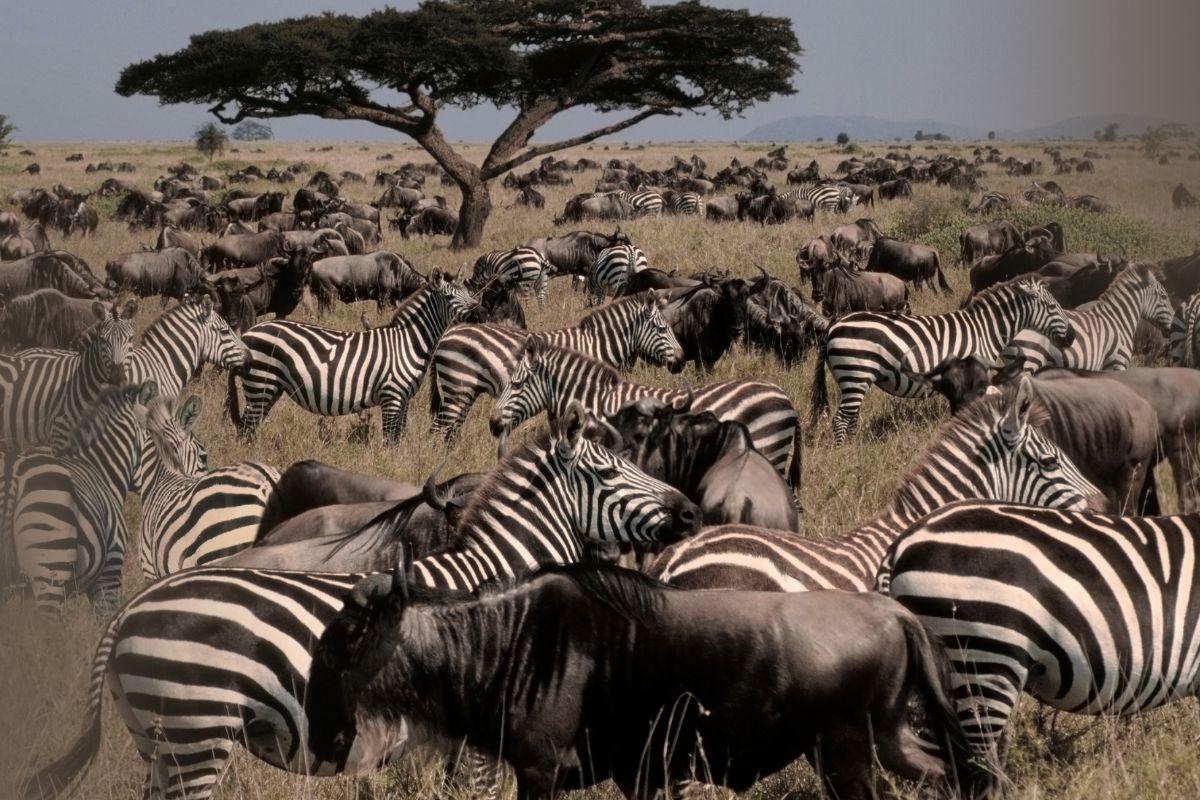
The Serengeti is Tanzania’s largest and most famous safari park: roughly 14,750 km² of open plains, kopjes and riverine woodland, home to the Great Migration and some of Africa’s highest densities of lions, cheetahs and leopards. One important thing to know before you book is in the Serengeti, where you stay matters as much as when you go. The park is so large that the herds can be a four-hour drive from your lodge. Match your camp’s location to your travel month, and a good safari becomes an extraordinary one.
This guide walks you through the Serengeti zone by zone, month by month, with honest costs and the practical detail you need to plan with confidence.
What makes the Serengeti different from other safari parks?
There are three things set the Serengeti apart.
Scale
The Serengeti is far bigger than most first-time visitors imagine. Kenya’s Maasai Mara National Reserve, its northern neighbour, is about 1,500 km². The Serengeti is nearly ten times that. This is why a Serengeti safari needs more nights than a Mara safari, and why lodge location drives the whole experience.
The Great Migration
Over a million wildebeest, joined by hundreds of thousands of zebra and gazelle, move in a year-round loop through the Serengeti–Mara ecosystem, following the rains and fresh grass. Most of that loop happens inside the Serengeti. The Mara gets the herds for a few months; the Serengeti has them in some form all year.
Predators everywhere
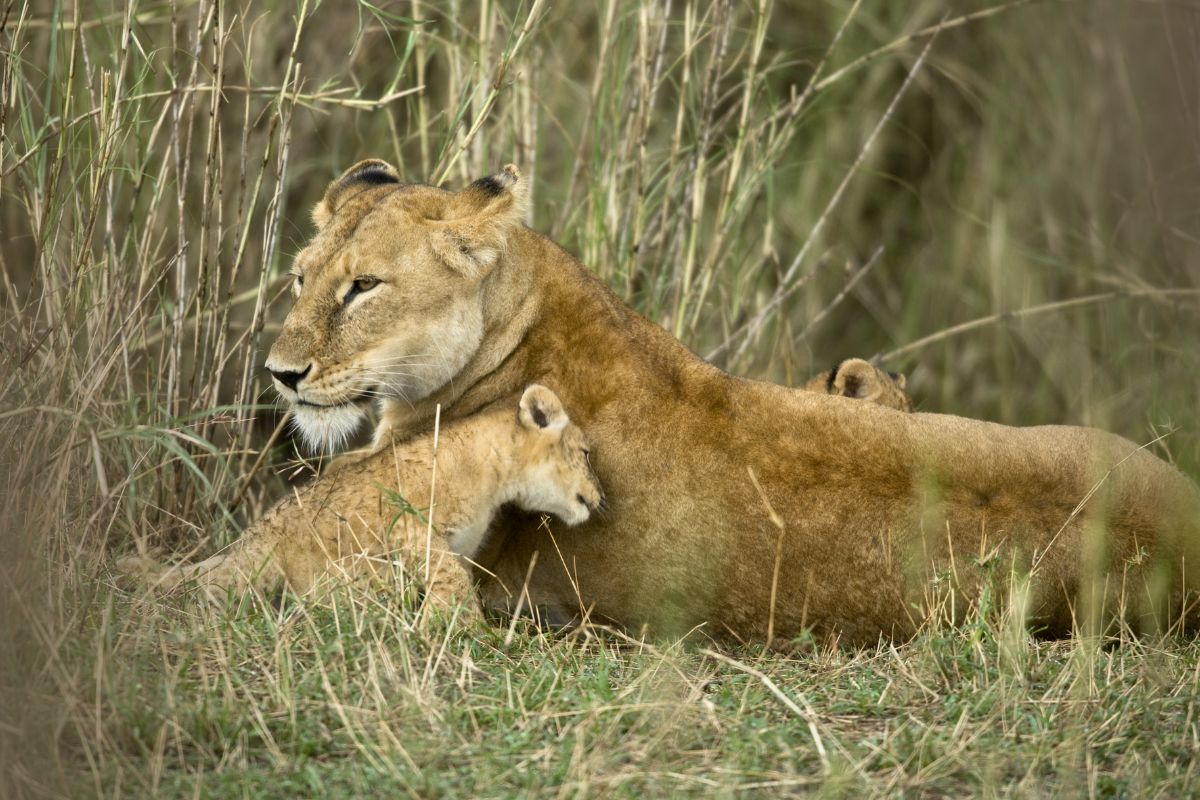
Even without the migration, the Serengeti is one of the best places in Africa for big cats. Resident prides, cheetahs on the open short-grass plains and leopards in the riverine trees around Seronera mean there is no truly “bad” month to visit. There are only months when you should be in a different part of the park.
Which part of the Serengeti should you stay in?
Think of the Serengeti as four safari areas sharing one name. Each has its own season.
Southern Serengeti and Ndutu: best December to March
The short-grass plains in the south, stretching into the Ndutu area on the edge of the Ngorongoro Conservation Area, are where the herds gather after the short rains. From late January through February this is calving season: thousands of wildebeest calves born each day, and predators working the plains non-stop. Lions, cheetahs and hyenas are exceptionally active. For many experienced travellers, this is the Serengeti at its most dramatic, and it’s far quieter than the northern crossing season.
Central Serengeti (Seronera): good year-round
Seronera is the heart of the park and its most reliable area for resident wildlife. The Seronera River valley is known for leopards, and lion prides are resident. The migration passes through the central areas, typically around April–May and again in November. The trade-off: Seronera is the busiest part of the park, so expect more vehicles at big sightings.
Nearby, the Moru Kopjes offer granite outcrops, lions and a small chance of black rhino. The eastern plains (Namiri, Gol) are cheetah country and feel far more remote.
Western Corridor (Grumeti): best May to July
The corridor running west towards Lake Victoria hosts the herds as they head north in the early dry season. The Grumeti River is the first major crossing point, famous for very large Nile crocodiles. It’s less visited than the north and a strong choice for June travellers.
Northern Serengeti (Kogatende, Lamai): best July to October
This is where the famous Mara River crossings happen, the scenes you’ve seen in wildlife documentaries. The north is remote, beautiful and, in peak season, in high demand. Camps here book up months ahead for August and September. Some herds also cross into Kenya’s Maasai Mara during these months.
Where is the Great Migration each month?
The migration follows the rain, not the calendar, so treat this as a planning guide rather than a guarantee. Timing shifts by weeks from year to year.
| Month | Where the herds usually are | What’s happening |
|---|---|---|
| December | Arriving in the south / Ndutu | Herds settle on the short-grass plains after the short rains |
| January–February | Southern Serengeti / Ndutu | Calving season peaks; intense predator action |
| March | South, starting to move | Calves strengthening; herds preparing to head north-west |
| April–May | Central and western Serengeti | Long rains; herds dispersed; green, quiet and lower-priced |
| June | Western Corridor | Herds mass; Grumeti River crossings begin |
| July | Western Corridor to north | First Mara River crossings possible late in the month |
| August–September | Northern Serengeti and Maasai Mara | Peak Mara River crossing season |
| October | North, starting to turn | Crossings continue; herds begin moving south |
| November | Eastern and central Serengeti | Short rains draw the herds back south |
An honest caveat about river crossings: no operator can promise one. Herds can gather on a riverbank for hours and turn away. Your chances improve with more nights in the north, a guide who reads herd behaviour well, and patience. For a broader view of seasons across Kenya, Tanzania, Rwanda and Uganda, see our guide to the best time to visit East Africa for a safari.
What wildlife can you see in the Serengeti beyond the migration?
- Big cats: lions across the park, cheetahs on the southern and eastern plains, and leopards around Seronera and the kopjes.
- Elephants and buffalo: present, though Tarangire is the better park for large elephant herds.
- Hyenas, jackals and bat-eared foxes: especially visible in calving season.
- Giraffe, hippo, topi, eland and huge numbers of gazelle.
- Birdlife: more than 500 recorded species, including ostriches, secretary birds and kori bustards.
Can you see the Big Five in the Serengeti?
Four of the five are reliably seen. Black rhino is the difficult one: a small, protected population lives around the Moru Kopjes, and sightings are rare. If rhino matters to you, pair the Serengeti with the Ngorongoro Crater, one of the best places in East Africa to see black rhino.
How much does a Serengeti safari really cost?
Safari pricing confuses almost everyone because the headline price rarely shows the fixed government fees underneath. Here’s how it actually adds up.
Park fees (the part nobody can discount)
- Conservation (entry) fee: US$70 + 18% VAT (US$82.60) per adult per 24 hours in peak season (16 May – 14 March), and US$60 + VAT (US$70.80) in low season (15 March – 15 May). Children aged 5–15 pay a reduced rate; under-5s are free.
- Concession fee: charged per person per night if you stay at a lodge or camp inside the park. It is usually included in your lodge or operator rate, but ask.
- Vehicle fees for your safari vehicle.
- Ngorongoro fees: if you drive in from Arusha, you pass through the Ngorongoro Conservation Area, which charges separately. Descending into the Crater itself adds a per-vehicle crater service fee.
Fees are charged per 24-hour period, so a three-night Serengeti stay means three or more days of park fees per person. On a multi-night trip, government fees alone can run to several hundred dollars per person before you’ve paid for a bed or a vehicle.
Typical total costs per person per day (market ranges)
| Style | Typical range (per person, per day) | What you get |
|---|---|---|
| Budget | US$200–350 | Camping or simple lodges, often a shared vehicle |
| Mid-range | US$350–700 | Private 4×4, comfortable en-suite tented camps or lodges, full board |
| Luxury | US$800–1,500+ | High-end camps, prime locations, often fly-in; peak-season rates higher |
These are indicative ranges across the market in 2026, excluding international flights. Prices rise in peak migration months (July–October, and around Christmas) and in the best-positioned northern camps.
How to compare quotes properly
- Ask for an all-in per-person total, not a daily rate. Arrival nights, transfers and a night near Arusha add up.
- Check that park fees are included and for how many days. A low quote that adds fees later is not a cheap quote.
- Check where each camp is located relative to your travel month. A cheaper camp in the wrong zone costs you hours of driving each day.
- Private vs shared vehicle is one of the biggest price and experience differences. Ask which you’re getting.
- Extras: hot-air balloon flights, drinks and tips are usually excluded.
How many days do you need in the Serengeti?
Three nights is the realistic minimum; four or more is better. Here’s why.
- 2 nights: possible, but much of your time goes into driving in and out. You’ll see wildlife, but you’re sampling the park, not experiencing it.
- 3 nights: enough to settle into one zone properly, for example Seronera or Ndutu, with full days of game drives.
- 4–5 nights: the sweet spot. You can split between two zones, such as central plus north in August, and give yourself real chances at a river crossing.
- 6+ nights: ideal for photographers, repeat visitors, or anyone following the migration closely.
A classic first-time northern Tanzania trip combines the Serengeti with Ngorongoro and Tarangire or Lake Manyara over 6–8 days.
See More: Tanzania Safari Packages
How do you get to the Serengeti?
By road from Arusha
Most safaris start in Arusha, the gateway to northern Tanzania, reached via Kilimanjaro International Airport (JRO). The drive west passes Lake Manyara and climbs through the Ngorongoro highlands before entering the Serengeti at Naabi Hill Gate. It’s a long day, but it doubles as a game drive and makes it easy to include the Crater.
By light aircraft
Scheduled bush flights connect Arusha with airstrips across the Serengeti, including Seronera, Kogatende in the north and Ndutu in the south. Flying saves a day of driving each way and is the practical choice for the far north. It costs more and has strict soft-bag luggage limits.
Coming from Kenya
Many travellers combine the Maasai Mara and the Serengeti. There is no direct tourist road crossing between the two parks, so a Kenya–Tanzania safari usually routes via the Namanga border to Arusha, or uses a flight. Tanzania restricts Kenyan-registered safari vehicles inside its national parks, so expect a change of vehicle and guide at the border. A well-run operator plans this handover so it’s seamless.
Should you combine the Serengeti with Ngorongoro, the Mara or Zanzibar?
Serengeti + Ngorongoro Crater
The most natural pairing: the Crater sits on the road between Arusha and the Serengeti, and it adds black rhino and a completely different landscape. See our 5 Day Ngorongoro – Serengeti Safari.
Serengeti + Maasai Mara
A strong choice if you want to experience both sides of the same ecosystem, or you’re travelling in the July–October crossing season. It needs more days and a border crossing, so it works best on trips of 9 days or longer.
See our 9 Days Serengeti – Masai Mara Safari
Serengeti + Zanzibar
The classic “bush and beach” finish. A short flight takes you from the Serengeti or Arusha to Zanzibar for a few days of recovery after early game drives. June–October and December–February are the driest windows for the coast.
See our 9 Days Serengeti – Zanzibar Safari & Beach Holiday Package
Is the Serengeti better than the Maasai Mara?
Neither is just “better.” They suit different trips.
- Choose the Serengeti if you want scale, wilderness, calving season, or a longer trip that follows the migration.
- Choose the Maasai Mara if you have fewer days. It’s compact, very productive for predators, and quick to reach from Nairobi.
- Choose both if you have 9+ days and want the full Serengeti–Mara story.
Frequently asked questions about the Serengeti
What is the best month to visit the Serengeti?
It depends on what you want to see. January–February is best for calving season in the south, June for the Western Corridor, and August–September for Mara River crossings in the north. Seronera in the central Serengeti offers excellent resident wildlife all year.
How many days do you need in the Serengeti?
Plan for at least three nights, and ideally four or five. The park is very large, and shorter stays spend a high proportion of time driving rather than watching wildlife.
How much is the Serengeti entrance fee?
For non-resident adults, the conservation fee is US$70 plus 18% VAT (US$82.60) per 24 hours in peak season, and US$60 plus VAT in low season (15 March – 15 May). Concession, vehicle and Ngorongoro fees are charged separately. Fees are reviewed periodically, so confirm current rates when booking.
Can you see the Great Migration in the Serengeti all year?
Yes, in some form. The herds are within the Serengeti for most of the year, moving from the south in the wet season to the north in the dry season. The key is staying in the right area for your month.
Is the Serengeti suitable for a first safari?
Very much so. It delivers big, dramatic wildlife viewing, and combining it with the Ngorongoro Crater gives first-time visitors a strong chance of seeing the Big Five in one trip.
Plan a Serengeti safari that fits your month
The difference between a good Serengeti safari and a great one is usually planning: the right zone for your dates, enough nights, and honest costs from the start. Tell us when you’re travelling and what you most want to see, whether that’s calving season, the river crossings, or a Serengeti and Zanzibar combination, and we’ll put together an itinerary built around where the wildlife will actually be. Start planning your Serengeti safari.