&Beyond Bateleur Camp is an elegant and classic safari camp at the base of the Oloololo escarpment in the Maasai Mara. Tents have tasteful furnishing with leather, handmade items, books, crystals, and antiques. Guests can borrow quality...
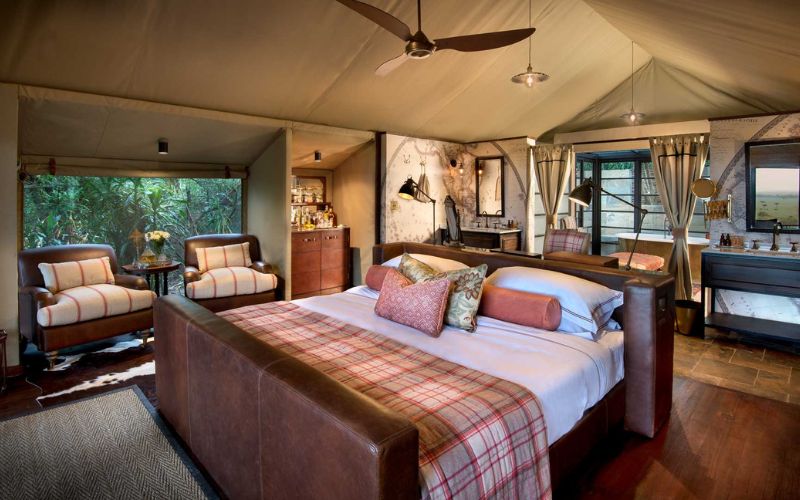

&Beyond Bateleur Camp is an elegant and classic safari camp at the base of the Oloololo escarpment in the Maasai Mara. Tents have tasteful furnishing with leather, handmade items, books, crystals, and antiques. Guests can borrow quality...
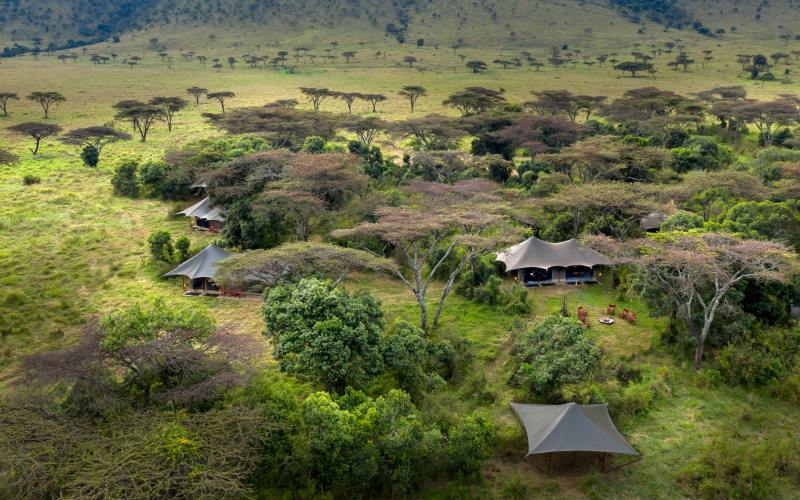
Angama means ‘suspended mid-air’ in Swahili. The lodge seems to hover between earth and heaven. Angama straddles the edge of the Great Rift Valley escarpment. The tented suites are 100sqm. Each suite has a glass facade and a sun deck outside....
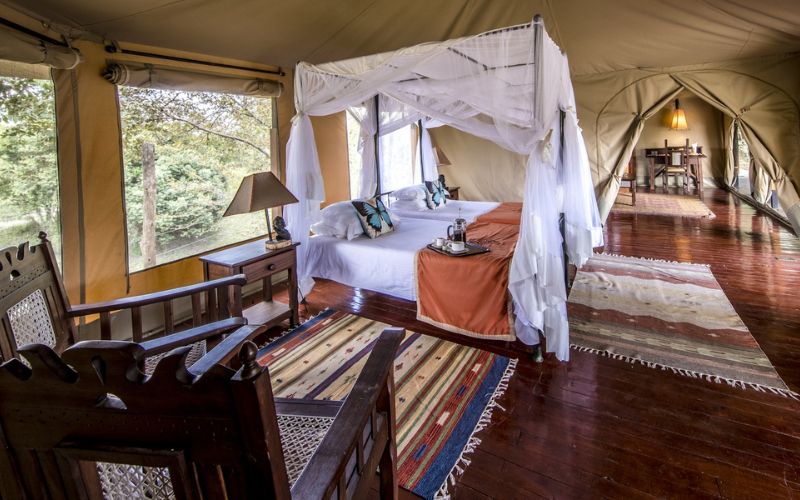
Ashnil Mara Camp Masai Mara is a luxury tented camp located in the Masai Mara National Reserve in Kenya. It is situated on the banks of the Mara River, offering stunning views of the river and a front-row seat to the wildebeest migration as they...
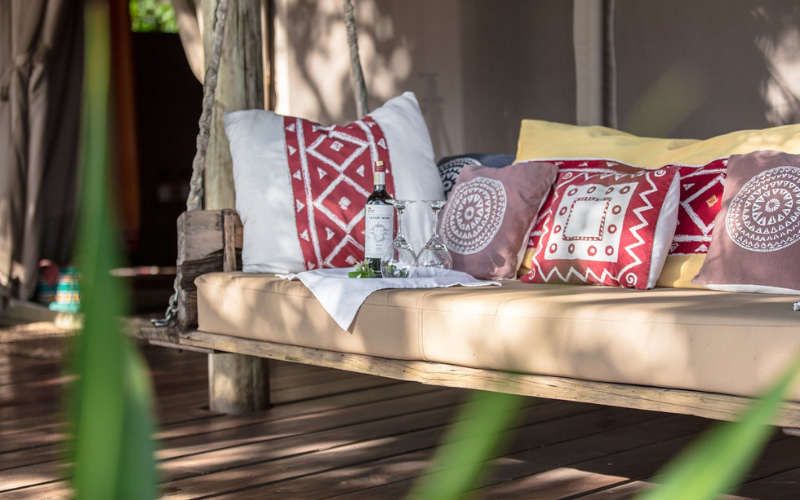
Basecamp Maasai Mara is protected from the hot sun by a small tropical forest along the Talek River. Hippos and crocodiles lurk in the river. Birds and monkeys occupy the trees surrounding Basecamp. The area is teeming with wildlife. Basecamp is...
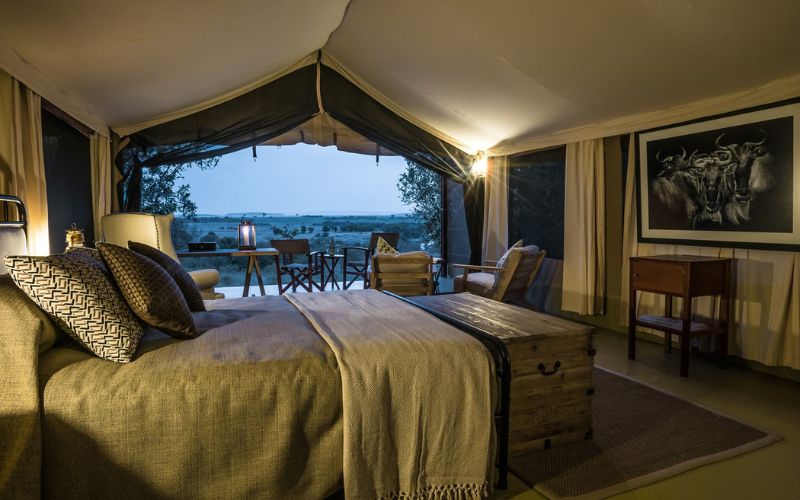
Entim Camp provides intimate luxury safaris and facilitates wildlife photography. Entim is at the center of the action during the annual wildebeest migration. There are only 12 rooms in Entim camp. The dining terrace overlooks the Mara River....
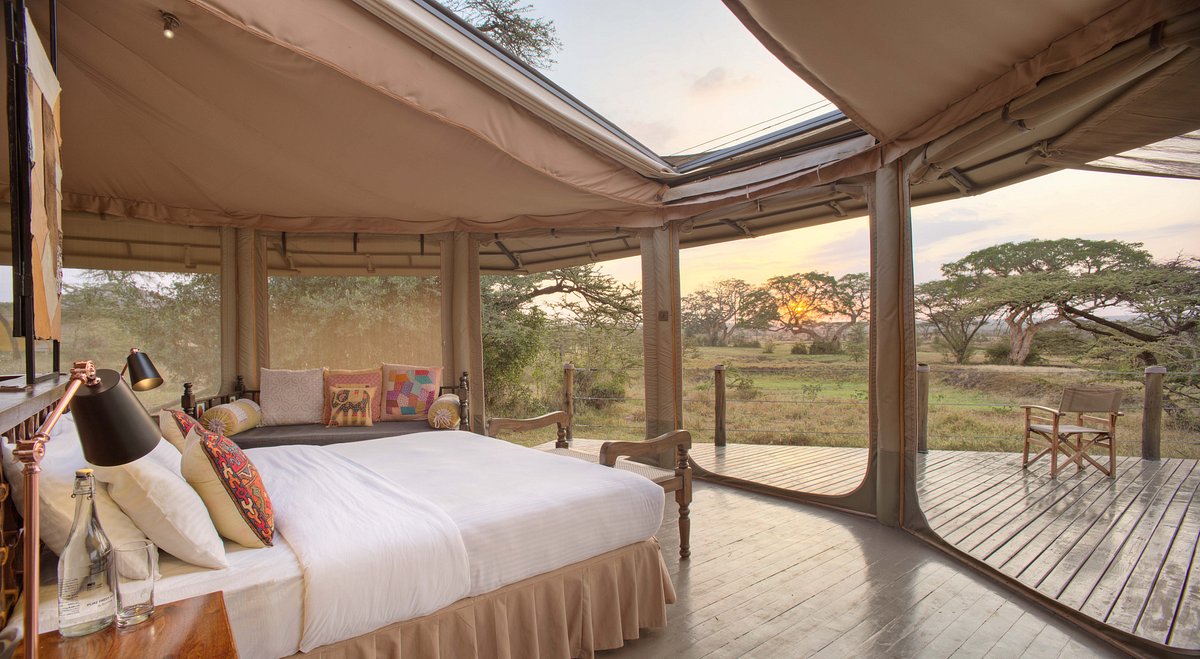
Pitching tent in the Mara North Conservancy any time soon? Mara North Conservancy is a private section in the Mara-Serengeti belt and Elephant Pepper is one of the few private camps over in the valley. One gets to see a wide range of animals...

To be up high and still be in touch with the ground, with an eagle’s view and an ant’s earthing of the Mara terrain, yes, that’s what you’re signing up for at this campground in the secluded Naboisho Conservancy in the Maasai Mara. Eagle View,...
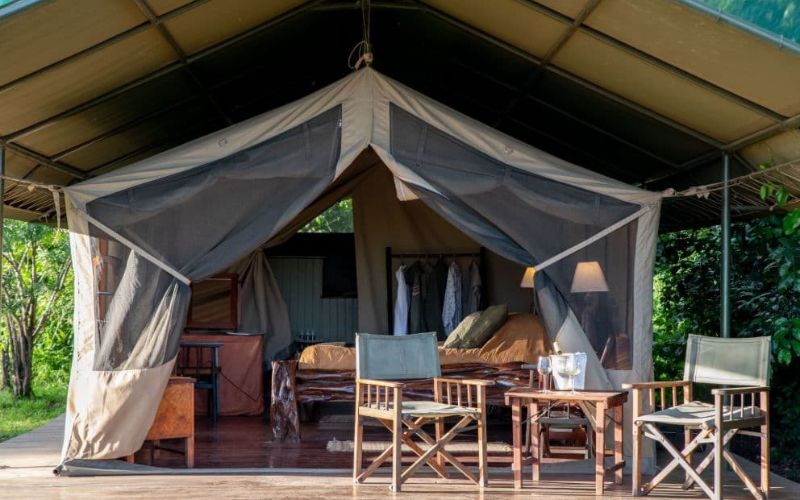
Sanctuary Olonana nestles inside a private spot along the Mara River in the middle of the Mara. Olonana has only 14 suites with glass sides. Governors' Camp has been on the same site since 1972. It lies inside the riverine forest next to the...
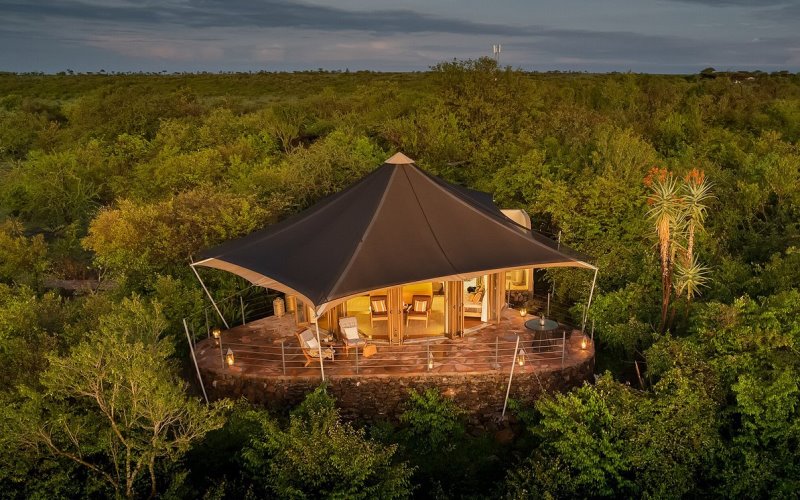
‘Ol Seki’ is a name of a tree situated in the Maasai land that symbolizes peace and harmony. Combine this with the service and luxurious amenities that Hemingway’s provide for all their guests and you have your perfect getaway you’ll wish to...
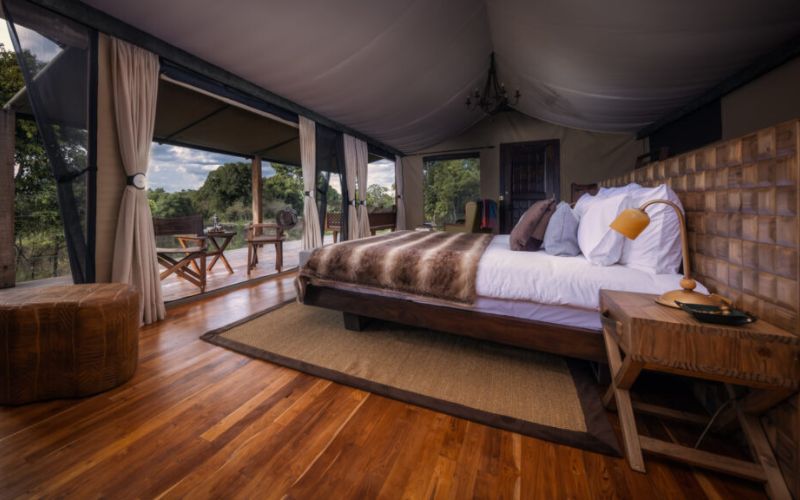
Ishara Camp has 15 suites, all incorporating African elements of design and thoughtful luxury. Local artisans thoughtfully handcrafted the door handles, beds, windows, lampshades, etc. No other camp in the Maasai Mara has a star bed for you to...
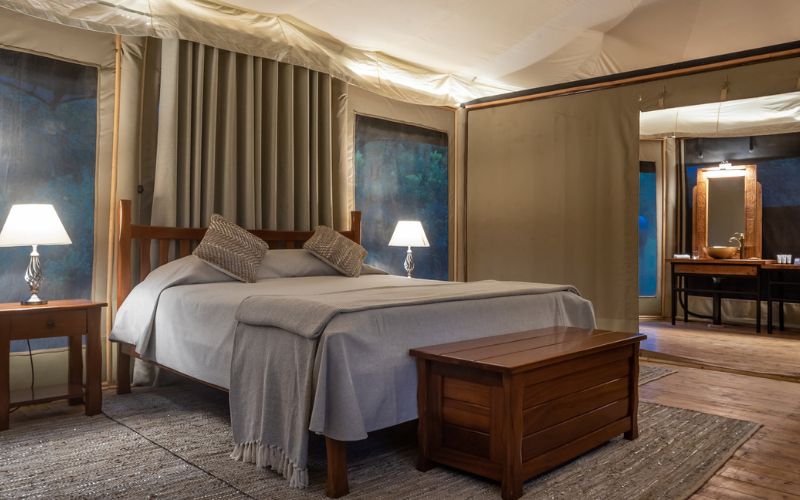
Ilkeliani Camp has stylish tented luxury suites with spacious verandahs for game viewing. There are 12 en-suite tents. Trees shield the tents and provide privacy. Stilts raise the tents high enough for panoramic views of the Mara plains....
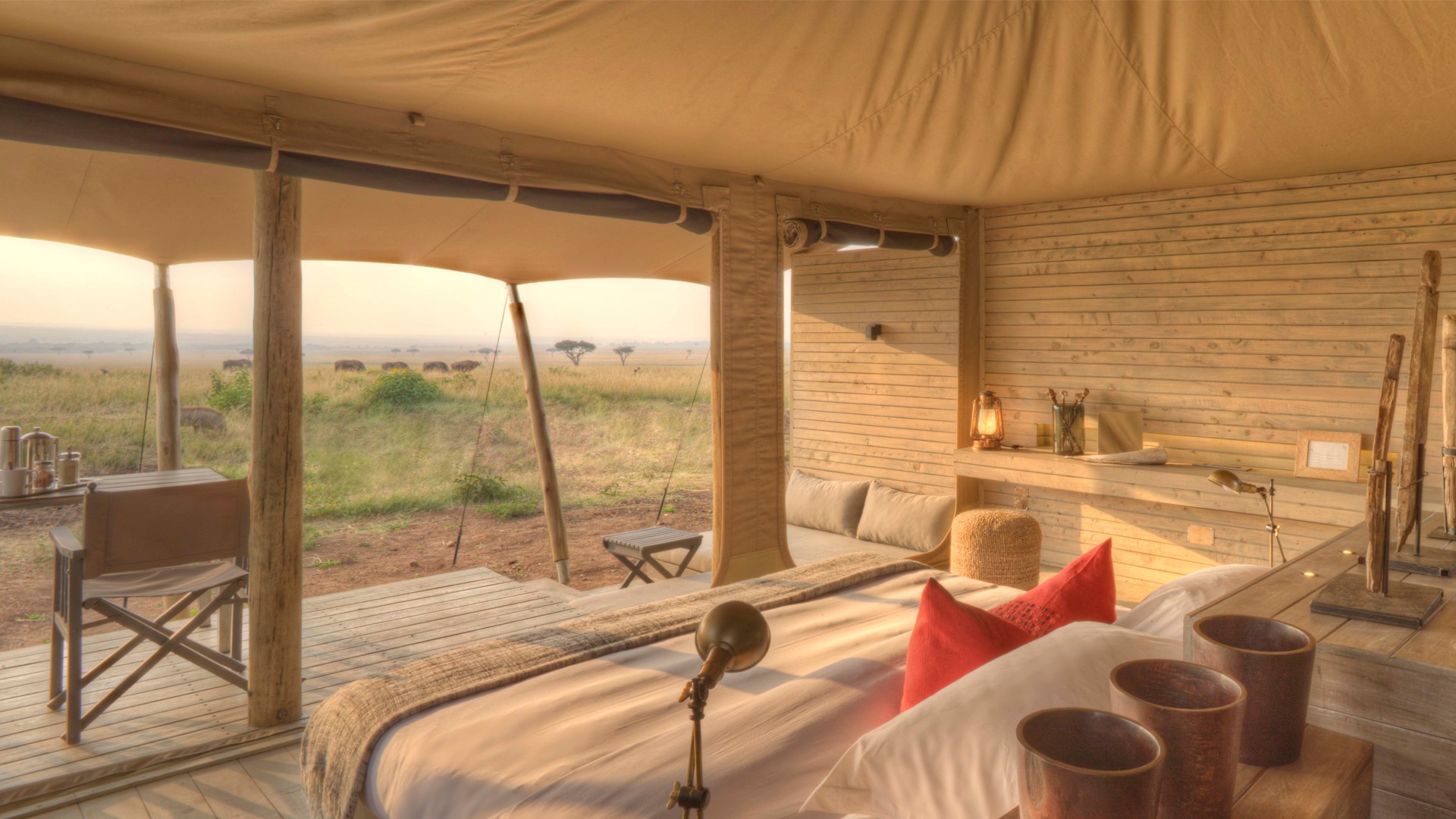
Kichwa Tembo Camp is a luxury safari camp located in the Maasai Mara National Reserve in Kenya. It is situated on a private concession bordering the reserve, offering guests a unique and exclusive safari experience. The Camp can be easily...

Karen Blixen, sound familiar? How about Karen Christenze von Blixen-Finecke? Well, the name is that of a Danish author who moved to Kenya in 1914. A Porsche experience in the wild is what this camp site provides in the Mara, so grab that ticket...
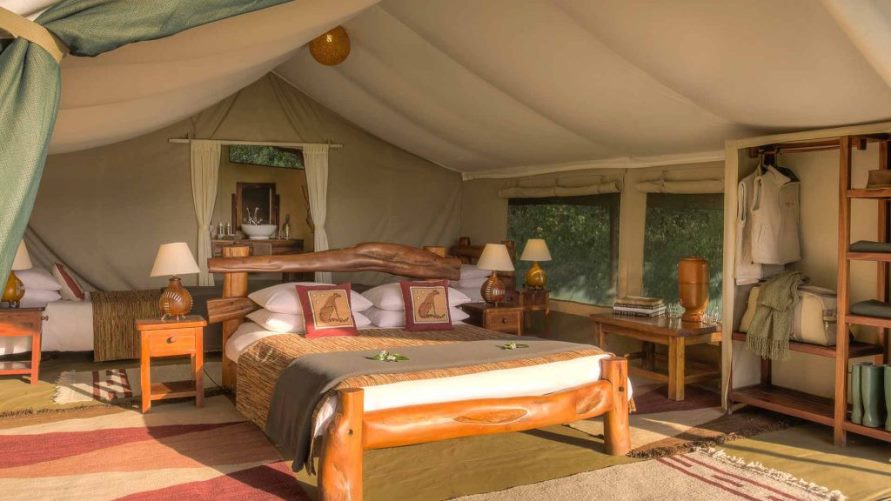
Kicheche Mara is one of the two camps by Kicheche that are located in the Mara. Travelling for photography work or just leisure, the lens will get the perfect focus. The camp has 6 luxurious tents. Each tent is made in a distinctive style and...
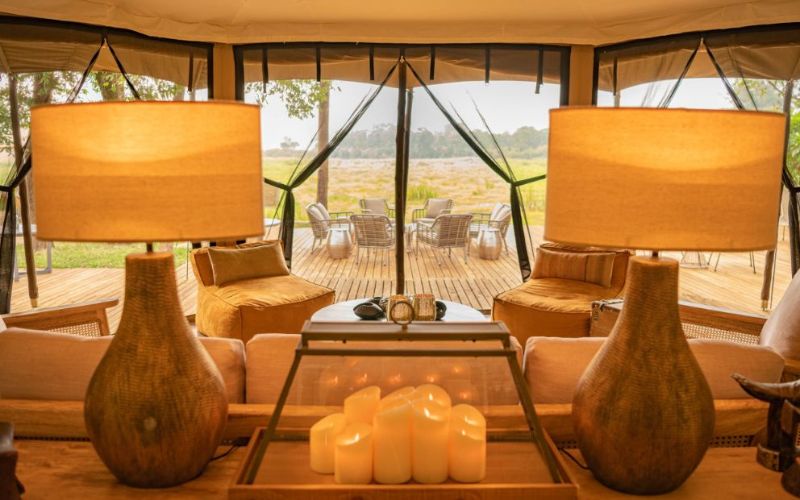
The only way to get to Little Governors is to cross a river and walk into a forest. Little Governors runs entirely on solar power. Each tent provides a wooden verandah for guests to watch hippos, crocodiles, warthogs, and birds drink from the...
Located in a valley in the Mara-Serengeti ecosystem, Naboisho Conservancy to be precise, Leopard hill camp promises to give you the ultimate Kenyan safari experience without compromising much luxury and coziness. The tents at this camp are more...

The luxury Mara Explorer Camp hides inside a thick forest grove beside the Talek River. It is a great spot to watch the wildebeest migration. Herds of hippos, elephants, and other animals come to drink from the river all year round. Mara...
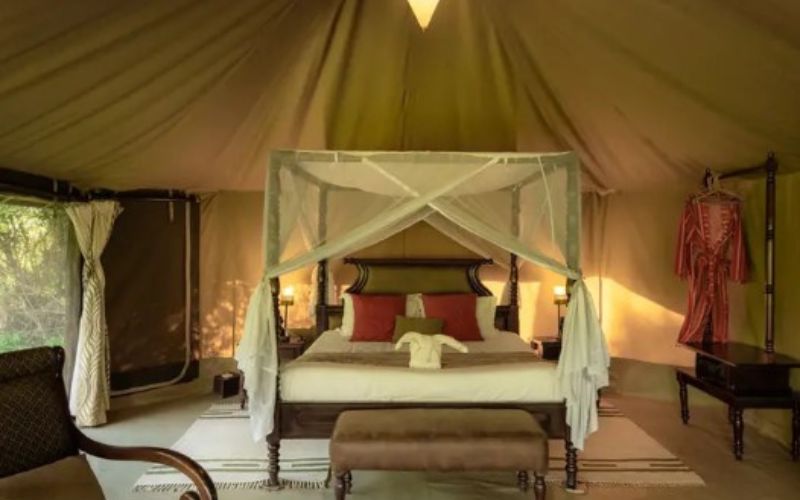
The Mara Ngeche Camp is elegant, luxurious, and exclusive. A Ravine forest conceals the private Mara Ngeche. Mara Ngeche looks over a hippo pool at the convergence of River Mara and River Talek. Mara Ngeche has 12 spacious en-suite tents...
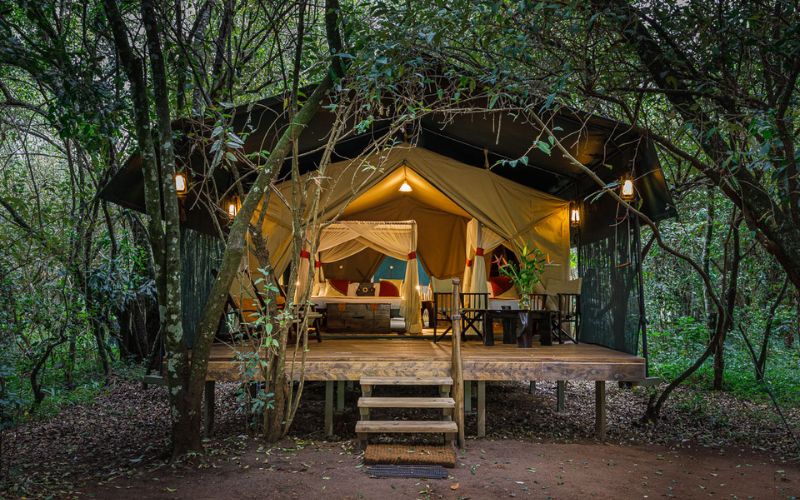
Mara Bush Camp Private Wing is a set of high-end tented rooms hidden by bushes and trees. Big cat sightings are common in this corner of the Maasai Mara. Guests watch the hippo pool from a platform. The Camp management practices utmost energy...
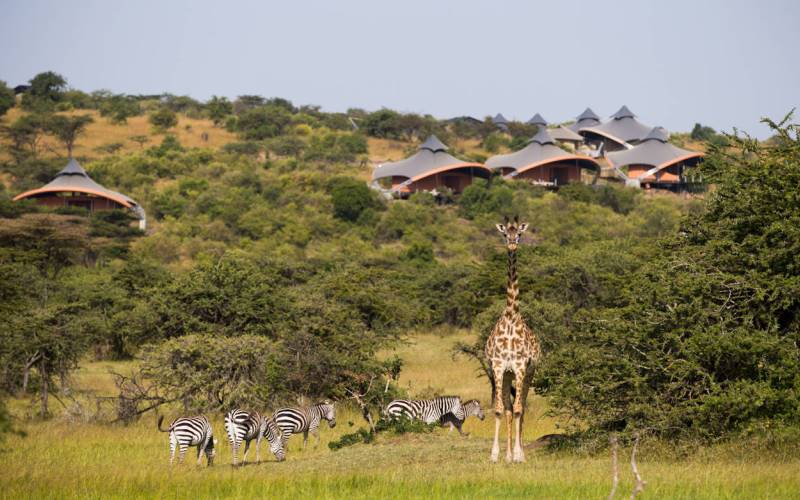
Mahali Mzuri is a luxury camp with 12 tents inside the Olare Motorogi Conservancy. Olare Motorogi is part of the Mara ecosystem. The Richard Branson-owned Mahali Mzuri is right on the path of the annual Wildebeest migration. All rooms come en...
The best time depends on what you want to see. Generally, the dry seasons offer the best game viewing across East Africa. Wildlife animals gather around water sources, vegetation is thinner, and roads are more accessible.
Kenya & Tanzania
The two main dry seasons are January–March and July–October. July to October is peak season, coinciding with the Great Wildebeest Migration in the Masai Mara and Serengeti, widely considered the greatest wildlife spectacle on earth.
Uganda & Rwanda
These countries are green year-round due to equatorial rainfall. The best months for gorilla trekking are June–September and December–February, when trails are drier and hiking is easier.
That said, the "green season" (April–June and November) has its own appeal, with fewer crowds, lower prices, and lush landscapes perfect for photography. Many experienced safari-goers actually prefer it. Whatever time of year you choose to visit, East Africa delivers extraordinary wildlife experiences.
We recommend a minimum of 4 to 7 nights for a first-time safari, which long enough to visit two or three different ecosystems without feeling rushed, and to truly settle into the rhythm of bush life.
A well-paced first safari might look like:
If your budget or time allows, 10–14 nights gives you the opportunity to explore more parks, add Uganda or Rwanda for gorilla trekking, or combine a deeper safari with a beach extension. Shorter 3–4 night safaris are possible and enjoyable, but you'll inevitably wish you had more time once you're out there.
East Africa is one of the world's most visited safari destinations and welcomes hundreds of thousands of international tourists every year safely.
Kenya, Tanzania, Uganda, and Rwanda all have well-established tourism industries with professional guides, reputable world class camps and lodges, and dedicated tourist police in major parks and cities.
As with any international travel, it pays to be aware of your surroundings, especially in urban areas like Nairobi and Dar es Salaam. Avoid displaying expensive items openly, use reputable transport, and follow your guide's advice at all times.
Inside the national parks and reserves, you are always accompanied by trained, licensed guides who know the wildlife and terrain. Rwanda in particular is consistently rated one of the safest countries in Africa, and Uganda has seen significant improvements in stability and tourism infrastructure.
We always recommend purchasing comprehensive travel insurance before your trip, and checking your government's current travel advisory for up-to-date information. Our team is happy to advise on the latest conditions for any destination we operate in.
Visa requirements vary by country and your nationality, but here is a general guide:
Kenya: Kenya operates an e-Visa system which allows you to apply online at evisa.go.ke before travel. Most nationalities are eligible. The standard single-entry tourist visa costs USD 50. Kenya also offers the East Africa Tourist Visa (see below).
Tanzania: Apply for an e-Visa at eservices.immigration.go.tz. Most nationalities pay USD 50 for a single-entry visa. Citizens of some countries can obtain a visa on arrival.
Uganda: e-Visas are available at visas.immigration.go.ug. Standard tourist visa is USD 50 for most nationalities.
Rwanda: Rwanda offers visa-free entry to all nationalities on arrival, making it one of the most accessible destinations in Africa. No advance application is needed.
East Africa Tourist Visa: If you plan to visit Kenya, Uganda, and Tanzania in one trip, ask about the East Africa Tourist Visa, a single USD 100 visa that covers all three countries and offers excellent value for multi-country itineraries.
Always verify current requirements with your nearest embassy or consulate before travel, as policies can change.
Each country uses its own currency:
| Country | Currency | Code |
|---|---|---|
| Kenya | Kenyan Shilling | KES |
| Tanzania | Tanzanian Shilling | TZS |
| Uganda | Ugandan Shilling | UGX |
| Rwanda | Rwandan Franc | RWF |
USD is widely accepted across all four countries, particularly at lodges, camps, national park entry gates, and for tipping. It is highly recommended to carry clean, unmarked USD bills printed after 2006, older or marked notes are often refused.
Card payments are accepted at most lodges, upmarket hotels, and tour operators in cities. However, cash is king in more remote areas. Many bush camps and smaller establishments are card-free. ATMs are readily available in Nairobi, Arusha, Kampala, and Kigali, but can be scarce near national parks.
Our recommendation: arrive with a mix of USD cash and your debit/credit card. Inform your bank of your travel plans before departure to avoid your card being blocked for unusual activity.
We recommend consulting a travel health clinic or your doctor at least 6–8 weeks before departure, as some vaccines require multiple doses. Below is a general guide. These requirements can vary depending on your nationality and specific itinerary.
Strongly recommended for all visitors:
Consider based on activities and length of stay:
Malaria: East Africa is a malaria risk area. Your doctor will likely prescribe antimalarial medication (Malarone, Doxycycline, or Lariam are common options). In addition, use insect repellent containing DEET, sleep under mosquito nets, and wear long sleeves and trousers at dusk and dawn.
Always carry proof of your Yellow Fever vaccination in the form of an International Certificate of Vaccination (yellow card) — you may be asked for it at border crossings.
East Africa is a magical destination for families, and many of our most memorable trips are with multi-generational groups. That said, a little planning goes a long way.
What works well for families:
Things to consider:
Let us know the ages of your children when enquiring and we will tailor an itinerary that works perfectly for your family.
English is the official language of tourism across all four East African countries. All professional safari guides, lodge staff, and tour operators communicate fluently in English. If you are English speaking, expect to have no language barrier throughout your safari experience.
Beyond English, here is what you will encounter:
Kenya:
Main local language: Swahili, English
Tanzania:
Main local language: Swahili, English
Uganda:
Main local language: English, Luganda, Swahili
Rwanda:
Main local language: Kinyarwanda, English, French
Swahili is the lingua franca of East Africa and widely spoken in Kenya and Tanzania. Learning a few basic phrases goes a long way — locals always appreciate the effort. Some useful ones: Jambo (hello), Asante (thank you), Karibu (welcome/you're welcome), Hakuna matata (no worries).
French is still spoken in Rwanda alongside English, a legacy of the country's history. Our guides in all destinations are selected not only for their wildlife knowledge but for their ability to communicate clearly, warmly, and knowledgeably with international visitors.
Indeed, and also highly recommended. East Africa's four countries sit close together geographically and each offers something distinct, making multi-country itineraries one of the most rewarding ways to experience the region.
Kenya + Tanzania:
The classic East African safari. Start with the Masai Mara in Kenya, cross into Tanzania for the Serengeti and Ngorongoro Crater. These two countries together cover virtually every major savannah experience available in Africa.
Kenya + Zanzibar:
Combine Kenya's world-class game parks with a beach ending on Zanzibar's white-sand beaches and turquoise waters. Perfect for couples and honeymoons.
Kenya + Uganda:
Pair Kenya's big game with Uganda's extraordinary gorilla and chimpanzee trekking in Bwindi Impenetrable Forest. Two completely different wildlife experiences in one trip.
Kenya + Rwanda:
Big five safari followed by gorilla trekking in Volcanoes National Park, also one of Africa's most exclusive and moving wildlife encounters.
All four countries:
For longer trips of 14–21 days, a grand East Africa circuit covering Kenya, Tanzania, Uganda, and Rwanda is entirely achievable and utterly unforgettable.
The East Africa Tourist Visa (covering Kenya, Tanzania, and Uganda for USD 100) makes multi-country travel both practical and cost-effective. Our team specialises in seamless multi-country itinerary planning — get in touch and we will design your perfect route.
Give us your preferred travel dates, number of travellers, your accommodation preferrence, and whether you would like to combine destinations. We'll prepare a fully itemised itinerary for you.