
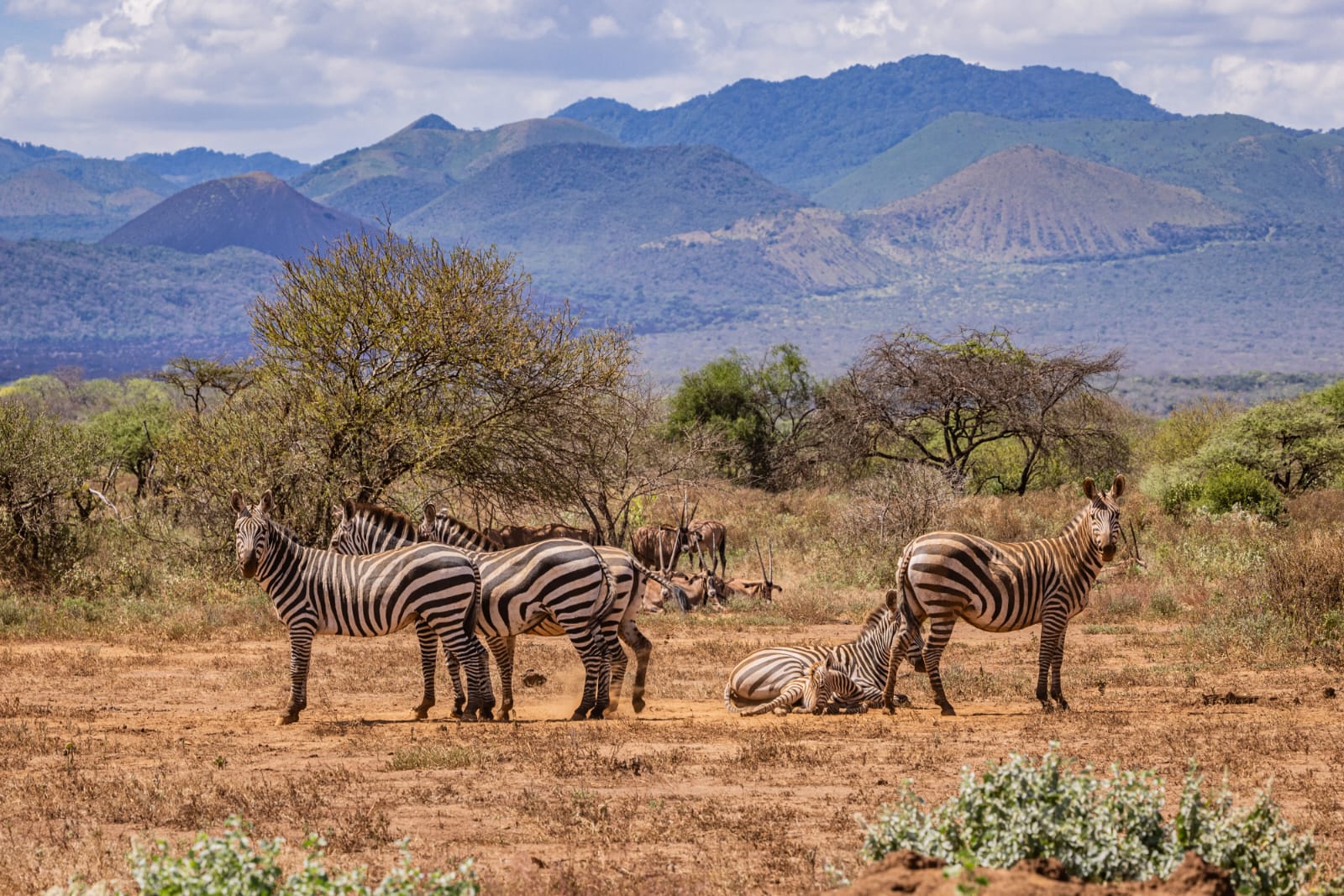
A combined Kenya and Tanzania safari is worth it if you have at least 10 days and want two different safaris. It pairs Kenya’s Maasai Mara or Amboseli with Tanzania’s Serengeti and Ngorongoro Crater, and can end on Zanzibar. If you have fewer than about 8 days, it usually isn’t worth it. You lose most of a day to the border, pay for two sets of entry documents and park fees, and switch vehicles and guides halfway. This guide explains how to decide, how many days you need, how the crossing works and what it really costs.
When is a combined Kenya and Tanzania safari worth it?
| Combine Kenya and Tanzania if… | Stick to one country if… |
|---|---|
| You have 10 days or more on safari | You have 7 days or fewer |
| You want contrasting landscapes: Amboseli’s elephants under Kilimanjaro and the Ngorongoro Crater | Your one goal is the Mara River crossings, which either side can deliver from July to October |
| You want to end on a beach in Zanzibar | You’re on a tight budget and every extra fee matters |
| Your flights already arrive in one country and leave from the other | Long road days and border queues would spoil the trip for you |
The Maasai Mara and the Serengeti are one ecosystem split by a border. The wildebeest migration moves between them. Combining the two countries gets you different landscapes, different seasons and different experiences. The animals, however are not different.
What does each country add to the trip?
What Kenya adds
- The Maasai Mara is where the famous river crossings play out in Kenya, usually from July into October. Outside migration season it still holds strong resident wildlife.
- Amboseli is known for big elephant herds with Mount Kilimanjaro on the skyline. It’s also the natural springboard for the Namanga border crossing into Tanzania.
- Easy long-haul access. Nairobi is a major hub for flights from the UK, Europe and beyond, which makes it a practical place to start.
What Tanzania adds
- The Serengeti hosts the migrating herds for most of the year, including the calving season on the southern plains, which usually peaks around February.
- The Ngorongoro Crater is a volcanic caldera with dense wildlife on its floor.
- Tarangire is a good first or last stop near Arusha, known for its elephants and baobab trees.
- Zanzibar is a short flight from the northern safari circuit and an easy place to finish the trip.
When does combining Kenya and Tanzania not make sense?
When the trip is short. On a 6- or 7-day safari, the transfer day between countries eats a big share of your game-viewing time. You’d see more animals by staying in one country and spending that day in a park.
When the river crossings are your only goal. From July to October the herds move back and forth across the Mara River. You can watch from the Kenyan side, the northern Serengeti side, or both. Doing both adds cost and logistics, but it doesn’t double your chances of seeing a crossing.
When the budget is tight. Crossing into Tanzania adds a visa, Tanzania’s mandatory inbound travel insurance and a second set of park fees. The cost section below adds this up.
How many days do you need for a Kenya and Tanzania safari?
| Trip length | What realistically fits | Our view |
|---|---|---|
| 7 days | One country done well, e.g. Mara + Amboseli, or Serengeti + Ngorongoro + Tarangire | Don’t combine |
| 8–9 days | Mara + Serengeti by air, or Amboseli + a short northern Tanzania loop by road | Possible, but rushed |
| 10–12 days | Two or three parks in each country with one transfer day | The sweet spot |
| 13–16 days | A full two-country safari plus 3–4 nights on Zanzibar | Best if you want a beach finish |
As a rule of thumb, count one full day for the move between countries. Then make sure you have at least 4 nights on each side, so the border doesn’t dominate the trip.
How do you get between Kenya and Tanzania on safari?
On a map, the Maasai Mara and the Serengeti touch. In practice, you can’t drive straight from one into the other. The Sand River–Bologonja crossing between them is closed to tourists. Every combined safari uses one of these four routes instead.
| Route | How it works | Time | Best for |
|---|---|---|---|
| Road via Namanga | Drive from Amboseli or Nairobi to the Namanga one-stop border post, switch vehicles, continue to Arusha or Tarangire | About half a day from Amboseli to Arusha, depending on the border queue | Amboseli + northern Tanzania road safaris |
| Fly Nairobi ↔ Kilimanjaro | Scheduled flight from Jomo Kenyatta International to Kilimanjaro International (JRO), then a road or air transfer into the parks | About 1 hour in the air | Most itineraries; the simplest connection |
| Mara ↔ Serengeti by air and road | Light aircraft from the Mara to Migori, road across the Isebania/Sirari border, then a flight from Tarime into Serengeti airstrips | Most of a morning | Migration trips that want both sides of the river |
| Mara ↔ Serengeti by road via Isebania | Drive west from the Mara to the Isebania border, then south into the Serengeti | More than half a day on rough roads | Rarely our first choice; only when flights don’t fit |
We’ve covered the Mara-to-Serengeti route step by step in our Maasai Mara and Serengeti cross-border guide.
What actually happens at the border?
Tanzania requires safari guests to continue in Tanzanian-registered vehicles. On a road crossing, your Kenyan driver-guide drives you to the border. You clear immigration, and a Tanzanian driver-guide meets you on the other side with a new vehicle. Your luggage moves across with you.
Namanga is a one-stop border post, so you stop once to clear both countries’ formalities. A few things make the day smoother:
- Keep your documents in your day bag: passport, Tanzania visa or eVisa grant notice, yellow fever certificate and Tanzania insurance certificate. Printed copies help when phone signal is weak.
- Settle up with your Kenyan guide before you cross. If you plan to tip, the border is where you say goodbye. Our safari tipping guidelines cover typical amounts.
- Expect queues in peak season. We build slack into transfer days so a slow border doesn’t cost you an afternoon game drive.
Should you start in Kenya or Tanzania?
1. Where are your flights? The most efficient combined safaris use open-jaw tickets: you fly into Nairobi and out of Kilimanjaro or Zanzibar, or the reverse. This saves a backtracking day and often costs little more than a return ticket. Check this before you fix the route.
2. When are you travelling? The migration follows the rains, so the season decides where the herds usually are. See the timing table below.
3. Do you want a beach finish? If so, ending in Tanzania makes sense, because Zanzibar is a short hop from the northern circuit.
Whichever order you choose, get the yellow fever vaccination before you travel. Tanzania requires a yellow fever certificate from travellers arriving from countries with yellow fever risk, and Kenya is on that list. Ask a travel clinic about your own situation.
What visas and documents do you need for Kenya and Tanzania?
You need separate entry permission for each country. The East Africa Tourist Visa covers Kenya, Uganda and Rwanda only. It does not cover Tanzania. That surprises a lot of travellers.
| Requirement | Kenya | Tanzania |
|---|---|---|
| Entry permission | Electronic Travel Authorisation (eTA), applied for online before travel at etakenya.go.ke. About US$30 plus a small processing charge (as of November 2026). | Tourist visa, by eVisa at visa.immigration.go.tz or on arrival at main entry points. US$50 for most nationalities; US citizens get a US$100 multiple-entry visa (as of November 2026). |
| Mandatory insurance | Not required at the time of writing | Government inbound travel insurance, US$44 per visitor, required since 1 October 2026. Buy it for your first point of entry into Tanzania only. |
| Yellow fever certificate | Needed if arriving from a country with yellow fever risk | Needed if arriving from Kenya or another yellow fever risk country |
| Passport | Valid for at least 6 months after arrival, with blank pages | |
Apply for the Kenya eTA well ahead. Kenya’s own guidance asks for at least 72 hours before travel, and UK government advice suggests allowing around two weeks. Entry rules change, so always check your own government’s travel advice for both countries before you book flights.
What does a combined Kenya and Tanzania safari cost?
The cost of a combined safari depends on the season, the level of lodges, how many people share the vehicle and which flights you need. What we can show you are the government fees every operator has to pay.
Park fees you’ll pay on a combined safari
| Park (non-resident adult) | Fee as of November 2026 |
|---|---|
| Maasai Mara National Reserve | US$100 per day (January–June); US$200 per day (July–December) |
| Amboseli National Park | US$90 per 24 hours |
| Serengeti National Park | US$82.60 per 24 hours, plus a US$70.80 concession fee per night if you sleep inside the park (both include VAT) |
| Ngorongoro Conservation Area | US$70.80 per 24 hours, plus a crater service fee of US$295 per vehicle for each descent into the crater |
Three examples show how these add up:
- Season are important in Kenya. Two days in the Maasai Mara cost US$400 per adult in park fees in August, and US$200 in March.
- Sleeping inside the Serengeti adds up. Two nights inside the park cost US$306.80 per adult in entry and concession fees (2 × US$153.40).
- Group size matters at Ngorongoro. The US$295 crater fee is per vehicle, so it works out at US$147.50 each for a couple and US$73.75 each for a group of four.
On top of park fees, crossing into Tanzania adds around US$94 per person in entry costs for most nationalities: a US$50 visa plus US$44 insurance. For US citizens it’s US$144, because their visa costs US$100. Add the Kenya eTA as well.
Questions to ask any operator about a combined quote
- Are park fees included at the right seasonal rate for my dates?
- Is the Ngorongoro crater fee included, and how many people share the vehicle?
- Does the price include the Tanzanian vehicle and guide after the border?
- Are flights between the countries included, or quoted separately?
- Is the price per person sharing, and in which currency?
- What’s excluded? Usually visas, Tanzania insurance, tips and international flights.
When is the best time for a combined Kenya and Tanzania safari?
The migration follows the rains, so the timings below are typical patterns, not guarantees. They shift by a few weeks from year to year.
| Months | Where the herds usually are | What that means for a combined trip |
|---|---|---|
| January–March | Southern Serengeti and Ndutu (calving, usually peaking in February) | Focus Tanzania on the south. The Mara is on its lower fee rate (US$100/day) with resident wildlife rather than the migration. |
| April–May | Central and western Serengeti | The long rains usually fall now. Fewer visitors, but road transfers can be slower and flying between countries is safer. |
| June–early July | Western Serengeti (Grumeti River) | A good shoulder window before Kenya’s peak fees start on 1 July. |
| July–October | Northern Serengeti and the Maasai Mara (Mara River crossings, usually peaking August–September) | Classic combined-safari season. Expect peak demand and the higher Mara fee. Book early. |
| November–December | Herds moving back south through the Serengeti | Short rains, greener landscapes, and the Mara still on its July–December rate. |
Planning for July to October? This is when lodges near the river fill first, so it pays to plan several months ahead.
Three combined safari routes that work
These are the packages that usually work best. Each can be adjusted for lodge level and budget.
1. 10 days: Amboseli and northern Tanzania by road
- Day 1: Arrive Nairobi
- Days 2–3: Amboseli (elephants, Kilimanjaro views)
- Day 4: Drive to Namanga, cross the border, switch vehicles, continue to Tarangire
- Day 5: Tarangire
- Days 6–7: Serengeti
- Day 8: Ngorongoro Crater
- Days 9–10: Return to Arusha; fly home from Kilimanjaro
Why it works: one road crossing, no backtracking, and two very different landscapes.
2. 12 days: migration season on both sides of the river (July–October)
- Days 1–4: Nairobi, then fly to the Maasai Mara for 3 nights
- Day 5: Cross to the northern Serengeti by the Migori–Tarime air link, or via Nairobi and Kilimanjaro
- Days 6–8: Northern Serengeti
- Days 9–10: Central Serengeti and Ngorongoro
- Days 11–12: Arusha; fly home from Kilimanjaro
Why it works: you stay with the herds whichever side of the border they’re on that week.
3. 14 days: safari plus Zanzibar
- Days 1–4: Nairobi and the Maasai Mara
- Day 5: Fly Nairobi to Kilimanjaro
- Days 6–10: Tarangire, Serengeti, Ngorongoro
- Days 11–14: Fly to Zanzibar for 3 beach nights; fly home from Zanzibar on day 14
Why it works: the open-jaw ticket (into Nairobi, out of Zanzibar) means you never retrace your steps.
For full day-by-day versions with lodges, see our Kenya and Tanzania safari packages.
Frequently asked questions
Is a combined Kenya and Tanzania safari worth it for one week?
Usually not. The day spent crossing between the countries takes too large a share of a 7-day trip. With a week, you’ll see more by focusing on one country. Combining the two starts to make sense at around 10 days.
Do I need two visas for a Kenya and Tanzania safari?
Yes. You need a Kenya eTA and a separate Tanzania visa. The East Africa Tourist Visa doesn’t include Tanzania. Since 1 October 2026, most foreign visitors to Tanzania also need the government’s US$44 inbound travel insurance.
Can you drive directly from the Maasai Mara into the Serengeti?
No. The crossing between the two parks is closed to tourists. You either fly via Migori and Tarime, drive the long way via the Isebania border, or connect through Nairobi and Kilimanjaro.
Do I need a yellow fever vaccine for Kenya and Tanzania?
Tanzania requires a yellow fever certificate from travellers arriving from Kenya, so on a combined safari you’ll need one. Get vaccinated well before departure and check with a travel clinic for advice specific to you.
Do you keep the same guide and vehicle across the border?
No. Tanzania requires safari guests to use Tanzanian-registered vehicles, so you switch to a Tanzanian driver-guide and vehicle at the border. A well-run operator arranges the handover so you don’t wait.
Not sure whether one country or two suits your trip?
Send us your dates and how long you have. You can also browse our Kenya and Tanzania safari packages to see real itineraries.