
Are you trying to choose between the Maasai Mara and the Serengeti for your next safari holiday? Go on a combined seamless Kenya-Tanzania safari back to back and put the two of Africa’s greatest wildlife destinations together.
What Is a Maasai Mara Serengeti Safari?
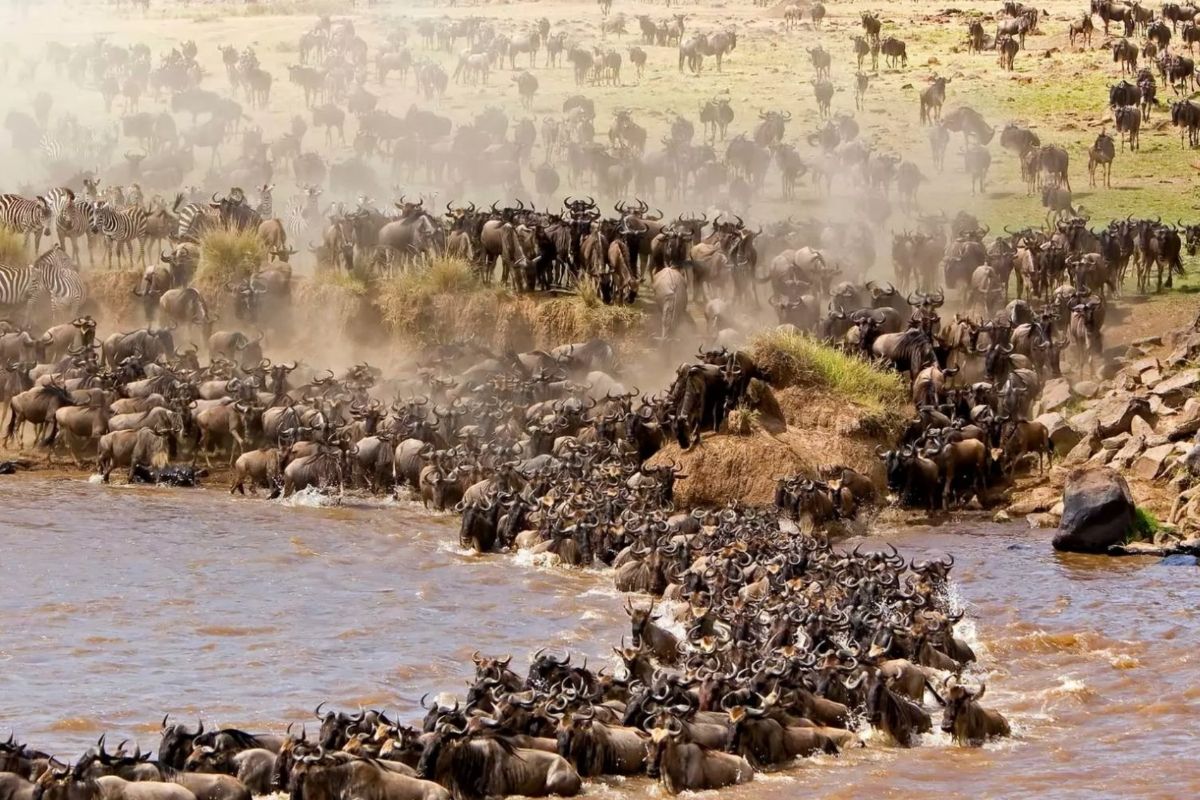
A Maasai Mara Serengeti safari is a cross-border itinerary that covers both Kenya’s Maasai Mara National Reserve and Tanzania’s Serengeti National Park in a single trip. The two parks actually share the Greater Mara-Serengeti ecosystem, separated only by a border. The same wildebeest herds that thunder across the Serengeti migrate north into the Mara every year, making this one of the most complete wildlife experiences on the planet.
How Long Does a Combined Maasai Mara and Serengeti Safari Take?
Most travellers spend 7 to 12 days on a combined itinerary. A common structure looks like this:
- Days 1–4: Maasai Mara (game drives, possible Mara River crossing)
- Day 5: Cross-border transfer into Tanzania
- Days 6–9: Serengeti (central, northern, or southern depending on season)
- Day 10 (optional): Ngorongoro Crater day trip before flying out of Kilimanjaro or Arusha
Shorter 7-day versions are possible, but give yourself at least 3 nights in each park to do them justice.
Here is a custom safari itineraries that combine Kenya and Tanzania Safaris
- 9 Day Serengeti Masai Mara Safari by flight
- 9 Days of Kenya & Tanzania Safari
- 10 Days Kenya & Tanzania Lodge Safari
- 11 Day Kenya & Tanzania Safari
- 12 Day Kenya & Tanzania Safari
- 13 Day Kenya & Tanzania Lodge Safari
- 14 Day Kenya & Tanzania Luxury Safari
- 16 Day Kenya & Tanzania Safari with Diani Beach
- 21 Day Kenya & Tanzania Safari with Diani Beach
What Is the Best Time to Do a Maasai Mara Serengeti Safari?
The timing depends on what you most want to see:
- July to October is peak season. The wildebeest migration has moved north into the Maasai Mara, and it is the time you can witness the famous Mara River crossings. Start in the Serengeti in July as the herds move, then follow them north into Kenya.
- January to March is calving season in the southern Serengeti, where thousands of wildebeest calves are born within weeks of each other, with predators following them. This is a different but equally spectacular experience, and crowds are lower.
- November to June still offers excellent game viewing in both parks even outside migration peaks, with greener landscapes and better rates.
Is It Complicated to Cross the Border Between Kenya and Tanzania?
Not when you plan ahead. The main crossing used for safari circuits is the Isibania–Sirari border post, which is relatively straightforward with the right documentation. You’ll need a valid passport and visas for both countries. An East African Tourist Visa covers Kenya, Uganda, and Rwanda but not Tanzania, so a separate Tanzania visa is required.
When you book with Go Kenya Safari, we will handle both sides of the trip for a stress-free safari experience. We manage the logistics, ground transfers, park permits, and accommodation on both sides, so you’re not coordinating between two different companies across an international border.
What Wildlife Can You See on a Combined Mara-Serengeti Safari?
Between the two parks, you’re looking at one of the densest concentrations of wildlife anywhere in Africa:
- Big Five: Lion, leopard, elephant, buffalo, and rhino (black rhino in Ngorongoro if you extend)
- Migration species: Wildebeest, zebra, Thomson’s gazelle
- Predators: Cheetah, hyena, wild dog (Serengeti especially)
- Birds: Over 500 species across both ecosystems
The Serengeti tends to have larger open plains and longer sightlines. The Mara is more intimate, with denser bush and the dramatic Mara River as a centrepiece during crossing season.
How Do You Get Between the Maasai Mara and Serengeti?
There are two main options:
- By road: A full-day drive via the Isibania border crossing. Tiring but allows you to see the landscape change and stop at the border communities.
- By charter flight: Some operators arrange light aircraft transfers between the two parks, cutting travel time significantly. This is the preferred option for shorter itineraries or higher-end trips.
Why Book a Cross-Border Safari With One Operator?
Coordinating a trip that spans two countries involves park permits, accommodation, border logistics, ground transport, and flight connections. When these are split across two operators, things fall through the gaps — a missed transfer, a permit not arranged, a lodge booking that doesn’t account for the border crossing day.
One operator with experience in both Kenya and Tanzania handles it as a single seamless itinerary. Go Kenya Safaris operates across both countries and designs cross-border packages with this kind of end-to-end coordination built in.
What Is the Difference Between the Maasai Mara and the Serengeti?
The two parks are often compared, but they complement each other more than they compete:
The Maasai Mara, located in Kenya, covers around 1,500 km² and is best known for river crossings, big cats, and intimate game drives, with peak season running from July to October.
The Serengeti, on the Tanzania side, is a much larger park at roughly 14,750 km² and is best experienced for its open plains, migration calving, and sheer scale, with peak periods varying by zone throughout the year.
The Serengeti is bigger and more varied and different zones behave differently at different times of year. The Mara is more concentrated and arguably easier to navigate in a shorter time.