
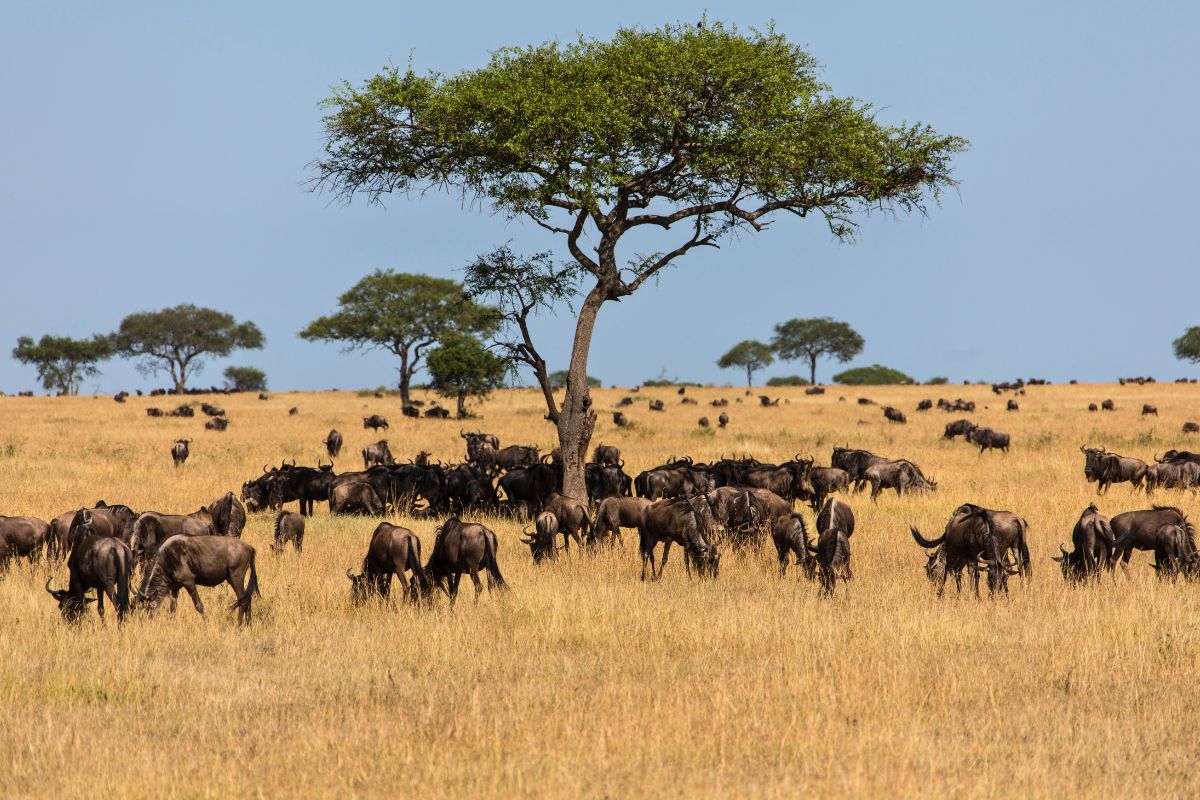
Kenya is the better choice for a first safari, a shorter trip, or a tighter budget in the first half of the year. Tanzania is the better choice if you want scale, solitude, the Ngorongoro Crater, or the Great Migration outside its short Kenyan window. Both countries share the same migration ecosystem and both deliver the Big Five. The honest difference is in cost structure, park rules, and what you can actually do once you’re inside the gate.
We run trips on both sides of the border ourselves, and this guide includes the places Tanzania genuinely does it better.
Between Kenya and Tanzania, which is better for a first safari?
For a first-time safari of 6-8 days, Kenya usually wins on logistics. Nairobi’s Jomo Kenyatta International Airport has direct flights from London, Amsterdam, and connections via Doha and Dubai, and you can be inside Amboseli or the Maasai Mara within a day of landing. Distances between parks are short enough that a week covers two or three ecosystems without long transfer days.
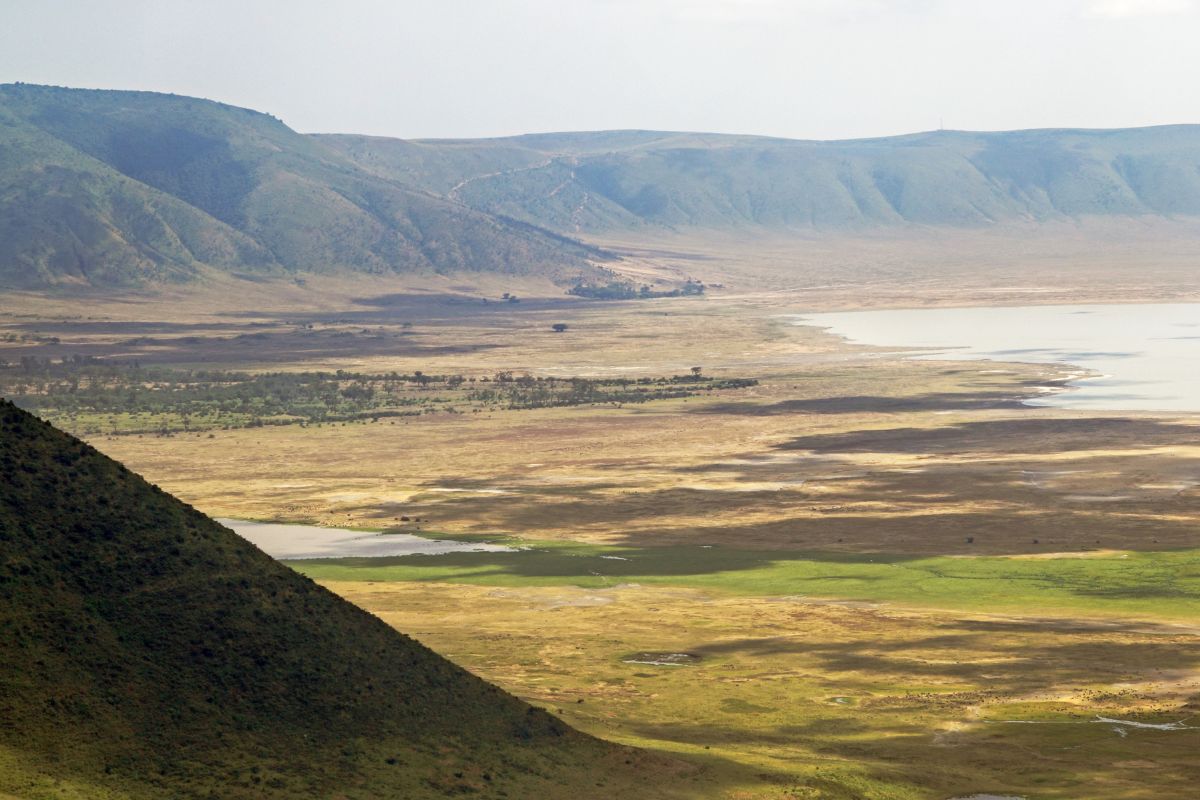
Tanzania’s Northern Circuit, Serengeti, Ngorongoro, Tarangire, Lake Manyara, is more compact than people expect, and the Ngorongoro Crater delivers an unmatched single-day wildlife density. A self-contained caldera with a resident population of nearly every major species, viewable in one descent. If your trip is 10+ days and Kilimanjaro is on the itinerary too, Tanzania’s case gets stronger fast.
Our recommendation: first safari, under 10 days, tight budget → Kenya. First safari with more time and a bigger budget, or a Kilimanjaro combination → Tanzania, or both.
Is a Kenya safari cheaper than Tanzania?
This is where most comparison articles are quietly out of date. Here’s what each country actually charges at the gate in 2026, and why the “Kenya is cheaper” rule of thumb only holds for half the year now.
What Kenya actually charges
Under the Kenya Wildlife Service tariff that took effect in October 2025, non-resident adults pay a tiered daily conservation fee depending on the park category: around $90 per 24 hours at Premium parks (Amboseli, Lake Nakuru), and around $80 at Wilderness-tier parks (Tsavo East, Tsavo West, Meru, Nairobi National Park).
The Maasai Mara sits outside this system entirely. It’s managed by Narok County, not KWS, and the county set a two-tier 2026 rate: $100 per non-resident adult per day from January to June, rising to $200 per day from July to December, a straight doubling for the second half of the year, which happens to cover most of the river-crossing season.
What Tanzania actually charges
Tanzania’s fee structure has more moving parts: a conservation/entry fee, a separate concession (bed-night) fee if you’re sleeping inside the park, a vehicle fee, and, for Ngorongoro specifically, a $295 per-vehicle crater descent service charge on top of everything else.
Quoted Serengeti and Ngorongoro daily conservation fees range from roughly $60 to $83 per adult, depending on the source, the season, and whether 18% VAT is quoted in or out of the headline number.
So which is actually cheaper?
Split by season, because a single answer is misleading:
- January–June: Kenya is clearly cheaper at the gate.
- July–December, on a Mara-centred Kenya trip: the gap closes and can reverse. A $200-a-day Mara ticket plus conservancy fees can outprice a comparable Serengeti day.
- Tanzania stays more expensive regardless of season once you add internal bush flights (often not optional on the Northern Circuit), the Ngorongoro crater descent fee, and thinner accommodation competition pushing camp rates up.
Park fees are a minority of total trip cost. Vehicle quality, guide experience, and camp choice move your final number far more than a $20-a-day gate fee difference. Comparing countries purely on conservation fees is how people end up booking the wrong trip for the wrong reasons.
Where does the Great Migration actually go, and when?
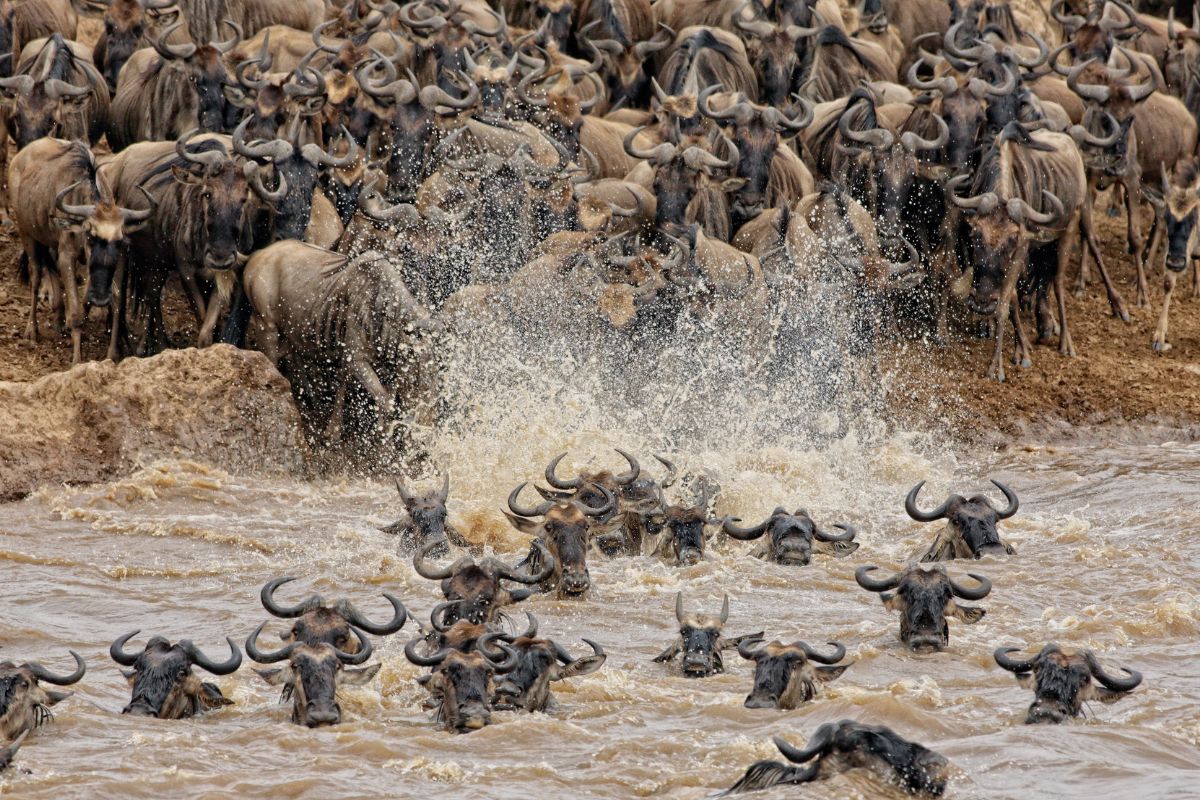
The Great Migration is one continuous loop through a single ecosystem that straddles both countries, roughly 1.5 million wildebeest plus hundreds of thousands of zebra, moving on a rough annual circuit with no fixed start or finish. The herds spend approximately nine to ten months of the year in Tanzania, and only around two to three months, roughly July or August through October, in Kenya’s Maasai Mara.
If the migration is your single biggest reason for travelling, that number should drive your country choice more than anything else in this article. Tanzania gives you a far wider booking window, including the underrated calving season from January to March, when hundreds of thousands of calves are born on the open Serengeti plains. In Kenya, it’s the Mara River crossings themselves, offering short, dramatic, and genuinely spectacular, but confined to a narrow window.
We cover exact month-by-month timing, herd positioning, and which camps to book for each phase in our full Best Time to Visit East Africa Safari guide.
Which country has better wildlife viewing?
Rhino is Kenya’s clearest win. Ol Pejeta, Lake Nakuru, Lewa, and Solio give you realistic, repeatable black and white rhino sightings. Tanzania’s black rhino population is effectively confined to the Ngorongoro Crater, in far smaller numbers.
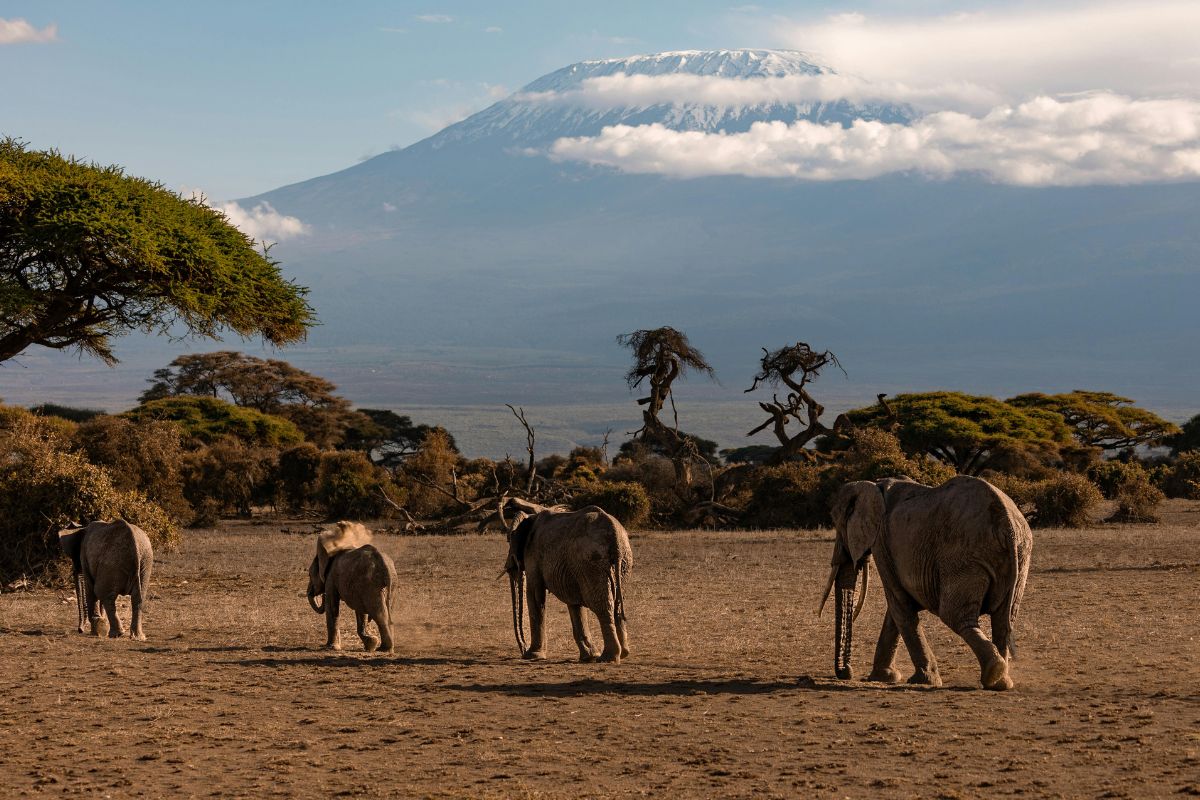
Predator density in the Mara ecosystem is exceptional on both sides of the border as one continuous population. Amboseli remains unmatched for one specific shot, elephant herds with Mount Kilimanjaro as a backdrop, a combination no other park in either country replicates.
Tanzania’s advantages are scale and species range. Serengeti’s sheer size supports wildlife densities per square kilometre that Kenya’s more compact parks can’t match, Tarangire’s baobab landscapes and elephant herds are consistently underrated, and chimpanzee trekking at Mahale and Gombe has no Kenyan equivalent at all.
Guest reviews of multi-country GoKenya itineraries consistently describe the same border-crossing pattern in practice, Nairobi departure into the Maasai Mara, a crossing into Tanzania for Ngorongoro and Serengeti, then back into Kenya for Amboseli, with one operator and a continuous guide relationship rather than a handoff at the border. That’s the practical version of “we operate on both sides,” and it’s worth confirming with current guide names and lodge partners before this goes live.
What can you do in Kenya that you can’t do in Tanzania?
This is the strongest structural argument for Kenya, and it’s the one most comparison articles skip entirely. Kenya’s private conservancies, bordering the Maasai Mara reserve itself, allow off-road driving, night game drives, walking safaris, and cap the number of vehicles permitted at any sighting.
Serengeti National Park, by contrast, prohibits off-road driving and night drives inside the park boundary.
In practice, that means a lion sighting in a Mara conservancy might be watched from three vehicles at a respectful, flexible distance. The same sighting in the Serengeti during peak season can mean twenty vehicles queued on a fixed track. Neither experience is wrong, but if flexibility and exclusivity matter to you, this is a genuine Kenya advantage. We go deeper on this exact trade-off, park by park, in our Maasai Mara Conservancies vs Reserve guide.
Which is easier to get to and travel around?
Nairobi has significantly more international flight volume than Tanzania’s safari gateways, Kilimanjaro International Airport (JRO) and Julius Nyerere International Airport in Dar es Salaam. From London, direct flights into Nairobi make a same-day arrival-to-safari transition realistic in a way Tanzania’s routing generally doesn’t match.
Once you’re on the ground, Tanzania’s Northern Circuit involves longer road transfers between parks, and reaching the Serengeti itself is often done by light aircraft rather than road, an additional cost and logistics layer that a Kenya-only trip usually avoids.
Visas are a real trap for first-time planners. The East Africa Tourist Visa covers Kenya, Uganda, and Rwanda on one multi-entry document, however, Tanzania is not part of it. If your itinerary includes Serengeti, Ngorongoro, Kilimanjaro, or Zanzibar, you need a separate Tanzanian visa regardless of what other East African visa you hold.
If you’re combining countries, the main overland crossings are Namanga (Kenya–Tanzania, near Amboseli), Isebania, and Bologonja/Sand River (near the Mara–Serengeti border).
What about beaches – Diani or Zanzibar?
Zanzibar has the stronger international brand and better direct beach-holiday connections. Diani, on Kenya’s south coast, is closer to the safari circuit and easier to bolt onto a Kenya-only itinerary without an extra flight leg. If beach time is a genuine priority rather than an afterthought, choose based on which safari country you’ve already picked, not the other way around.
Do you have to choose? Combining Kenya and Tanzania
You don’t have to choose. For most of our guests booking 9–21 days, combining the two countries is genuinely the better trip, not a compromise. That’s the length where a border crossing stops being a tax on your itinerary and starts being the thing that makes it worthwhile, with enough days to properly do Kenya’s Mara and conservancies and Tanzania’s Ngorongoro and Serengeti, without either side feeling rushed.
A border day generally means one travel day and a second full set of park gate fees, since Kenya and Tanzania run entirely separate conservation-fee systems. On a very short trip, like five or six days, that’s a real bite out of your time and budget for landscapes that can look similar from the vehicle. On anything in our usual 9–21 day range, you gain two distinct wildlife systems, the Ngorongoro Crater, and Kenya’s conservancy flexibility, all in one continuous trip.
This works cleanly for our guests specifically; we operate departures on both sides of the border ourselves, with our own driver-guides in Kenya and Tanzania.
We’ve built a full route-by-route breakdown of how these combined trips work, with border crossings, day-by-day pacing, and which parks pair well together, all in our Kenya–Tanzania combined safari guide. If you’re weighing a single-country trip against combining, that’s the next place to look.
Kenya vs Tanzania at a glance
| Factor | Kenya | Tanzania |
|---|---|---|
| Best for | First safaris, shorter trips, value | Scale, solitude, immersion |
| Migration window | ~2–3 months (Jul/Aug–Oct) | ~9–10 months, incl. calving (Jan–Mar) |
| Rhino | Strong (Ol Pejeta, Nakuru, Lewa) | Ngorongoro only, limited numbers |
| Off-road / night drives | Yes, in conservancies | No, in national parks |
| Gate fees, Jan–Jun | Lower | Higher |
| Gate fees, Jul–Dec | Can exceed Tanzania (Mara peak) | Stable year-round |
| Internal flights | Usually optional | Often required for Serengeti |
| Visa | EATV-eligible (with Uganda/Rwanda) | Separate visa always required |
| Beach add-on | Diani – no extra flight needed | Zanzibar – stronger brand |
Frequently asked questions
Is Kenya or Tanzania cheaper for a safari?
Kenya is generally cheaper from January to June. From July to December, Maasai Mara gate fees rise sharply and can match or exceed comparable Tanzania park fees, so the “Kenya is always cheaper” rule no longer holds year-round.
Which country is better for the Great Migration?
Tanzania, if you want flexibility, the herds are there roughly nine to ten months of the year, including calving season. Kenya offers a shorter but highly dramatic window for the Mara River crossings, roughly July to October.
Can you see the Big Five in both Kenya and Tanzania?
Yes, both countries offer realistic Big Five sightings. Kenya has a clearer edge for rhino specifically, thanks to dedicated sanctuaries like Ol Pejeta and Lake Nakuru.
Is it safe to travel between Kenya and Tanzania on one trip?
Yes, combined Kenya–Tanzania safaris are common and well-established, using recognised border crossings such as Namanga. You will need separate visa arrangements, since Tanzania is not covered by the East Africa Tourist Visa.
How many days do you need for a Kenya or Tanzania safari?
A single-country first safari works well at 6–8 days. Combining both countries properly, without rushing, generally needs 9–14 days or more.
Planning a trip and not sure which country, or both, fits your time and budget? We run departures ourselves in both Kenya and Tanzania, so you get one operator and one point of contact across the whole trip. Reach us at info@gokenyasafari.com or WhatsApp +254 723 321938 and we’ll help you decide.