
Short Answer
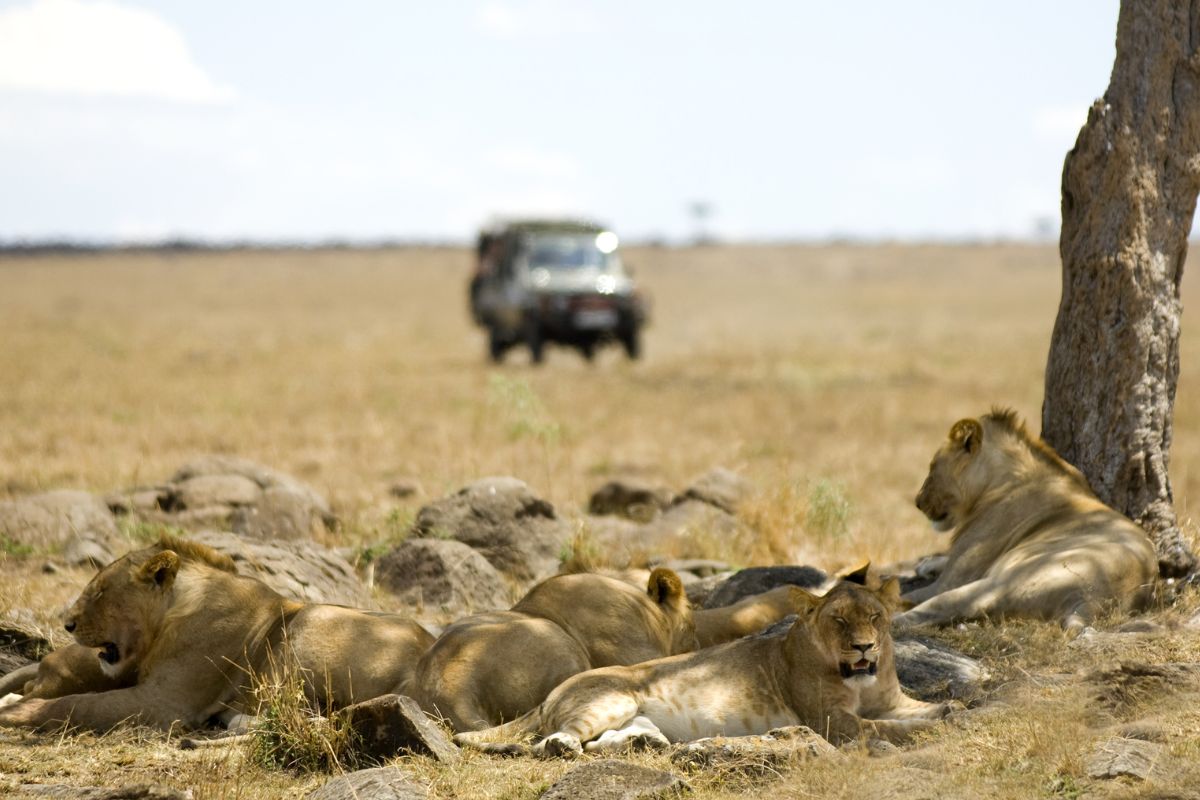
The Maasai Mara National Reserve is public land run by Narok County, and is open to anyone who pays at the gate. The conservancies are private wildlife areas on Maasai-owned land bordering the reserve, which only admits guests staying inside them. Conservancies cap the number of vehicles at a sighting and allow off-road driving, night drives, and walking safaris. The reserve allows none of those things. The famous Mara River crossings happen withing the Masai Mara Reserve.
What has changed for 2026 is the cost comparison. With reserve entry now at USD 200 per non-resident adult per day from July onwards, the old assumption that conservancies are the expensive option no longer holds. For a peak-season traveller, the gate fee alone can exceed what a conservancy charges for access. The real difference now sits in accommodation, not entry.
What is a Maasai Mara conservancy?
A conservancy is a block of Maasai-owned land next to the national reserve where individual landowners pool their parcels and lease them to a small number of tourism partners. Those partners pay a monthly lease fee per acre, direct to the families, and in return the land is managed for wildlife and grazing rather than being fenced, subdivided or farmed.
The reserve itself is only around 1,510 square kilometres. The wildlife that uses it does not stop at the boundary, lions, elephants and the migration herds move north and east into land that, without the conservancy model, would have been carved into smallholdings within a generation. The conservancies roughly double the protected area of the Greater Mara ecosystem.
“Private” is the word that confuses people. It does not mean foreign-owned or fenced off. It means access is restricted and the landowners are paid. Every guest who books a conservancy camp is paying rent to a named Maasai family.
What is the actual difference between the conservancies and the reserve?
| Maasai Mara National Reserve | Private conservancies | |
|---|---|---|
| Who runs it | Narok County Government (the Mara Triangle section is managed by the not-for-profit Mara Conservancy) | Maasai landowner associations, leased to camp operators |
| Who can enter | Anyone who pays at the gate, including day visitors | Guests staying in a conservancy camp only |
| Vehicles at a sighting | No enforced limit | Usually capped, commonly at three to five |
| Off-road driving | Not permitted | Permitted |
| Night game drives | Not permitted | Permitted |
| Walking safaris | Not permitted | Permitted with an armed guide |
| River crossings | The Mara and Talek river crossing points are inside the reserve | You day-trip into the reserve for these |
| How you pay | Per person per day at the gate | Bundled into your nightly camp rate |
One rule catches people out constantly: conservancy vehicles can drive into the reserve, but reserve vehicles cannot drive into the conservancies. Access runs one way. If you are booked into a lodge inside the reserve and decide midway through your trip that you want a night drive in Naboisho, you cannot simply drive over and buy one.
What does each option cost in 2026?
Reserve entry is set by Narok County and runs on a two-tier calendar.
- Non-resident adults: USD 100 per person per day, 1 January to 30 June. USD 200 per person per day, 1 July to 31 December.
- Children 9–17: USD 50 per day, year-round.
- Children 8 and under: free.
- Vehicles: charged separately, and normally included in your safari package rather than paid by you at the gate.
Conservancy fees are structured differently. Instead of paying at a gate, a conservation fee is built into your nightly camp rate, commonly in the region of USD 80–150 per person per night depending on the conservancy. You never see it as a separate line at a barrier. If you stay in a conservancy and never enter the national reserve, you pay no county gate fee at all.
Here is what that looks like in practice for two people on a three-night Mara stay in August.
Three nights in the reserve
Two adults × USD 200 × the number of days your ticket covers. Depending on how your arrival and departure days fall, that is typically USD 1,200–1,600 in gate fees for the couple, before a single night of accommodation. Reserve lodges range widely, from around USD 150 per person per night at the modest end to several hundred at the well-known properties.
Three nights in a conservancy
No gate fees. Full-board conservancy camp rates typically start around USD 350–450 per person per night at the more accessible camps and climb past USD 900 at the flagship properties, with the conservation fee, all game drives and usually drinks already included.
The takeaway: a conservancy stay is still usually the more expensive trip overall, but the gap is far narrower than it was two years ago, and in peak season the access portion of the cost has flipped. Anyone still telling you conservancies cost more because of the fees is quoting old arithmetic.
Can you visit a conservancy without staying in one?
No.
Conservancy access is tied to your bed. The landowners are paid based on the number of tourist beds the conservancy supports, and the low vehicle density that makes the experience worth paying for only survives if entry is capped. There is no day pass.
The reverse is open. If you are staying in a conservancy, your camp can take you into the national reserve for the day. You pay the county gate fee for that day on top of your camp rate, and most camps arrange it as a full-day excursion with a packed lunch. Plenty of our guests do exactly this during migration season: sleep in the conservancy, drive into the reserve for the crossings.
What about the Great Migration and the river crossings?
The dramatic Mara River crossings, the ones in every documentary, happen at specific points inside the national reserve, roughly between July and October. The conservancies sit to the north and east of the reserve. Herds do move through several of them, and Mara North in particular sees good migration movement, but the river itself and its established crossing points are reserve territory.
So if witnessing a crossing is your non-negotiable, you have two sensible options: stay in the reserve, or stay in a conservancy and budget for reserve day trips. What you should not do is book a conservancy expecting crossings on your doorstep.
The honest counterpoint: crossings are unpredictable. Herds mass at the bank for hours and then turn back. Guests who build an entire trip around one event sometimes go home without it. Guests who build a trip around consistently excellent predator viewing rarely go home disappointed, and that is what the conservancies deliver.
Which Maasai Mara conservancy should you choose?
They are not interchangeable. Size, terrain, camp style and price band differ significantly.
Olare Motorogi Conservancy
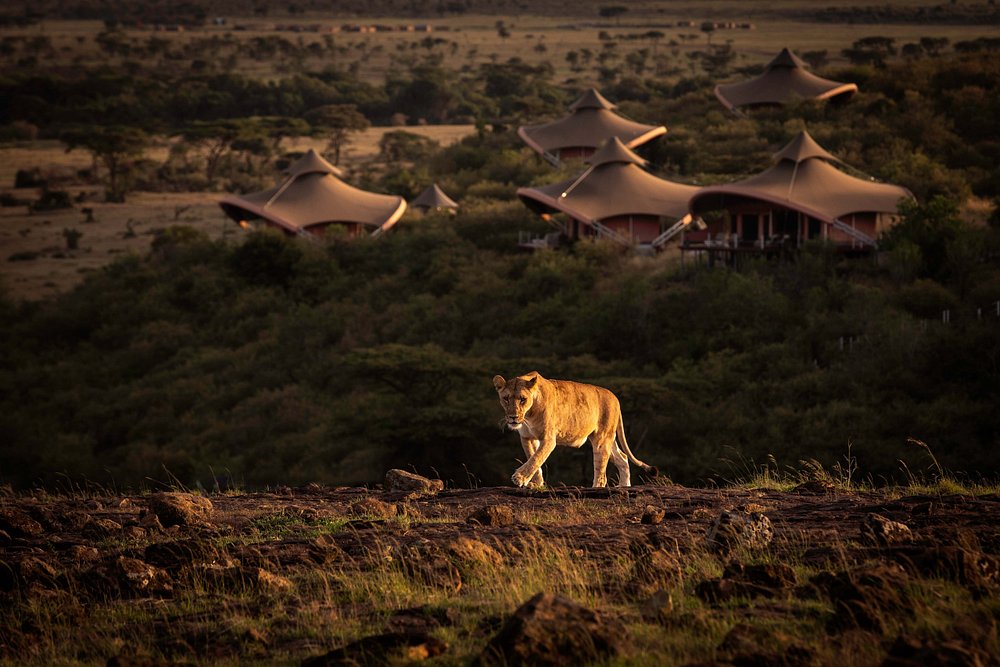
Around 35,000 acres [V] on the north-eastern edge of the reserve, sharing an unfenced boundary. Known for exceptional lion density combined with some of the strictest vehicle limits in the ecosystem. Open grassland with riverine forest strips. This is the choice for serious photographers. Camps here include Mahali Mzuri, Porini Lion Camp, Kicheche Bush Camp and Mara Plains. Upper price band.
Mara Naboisho Conservancy
Around 50,000 acres [V], one of the largest and most established. Very strong for lion, leopard and cheetah, with more varied terrain than Olare Motorogi, acacia woodland, hills, open plain. Widely regarded as a leading community-conservation model. Camps include Naboisho Camp, Encounter Mara, Ol Seki and Kicheche Valley. Mid-to-upper band, with more entry points than Olare Motorogi.
Mara North Conservancy
Around 74,000 acres [V] and the largest of the group, directly north-west of the reserve. Sees the most migration movement of the conservancies and has the Leopard Gorge escarpment country. Good balance of price and quality. Camps include Elephant Pepper, Karen Blixen Camp, Saruni Mara and Offbeat Mara.
Ol Kinyei Conservancy
Around 18,700 acres [V] and one of the smallest, sitting further east. Fewer beds means genuinely low traffic, and it is often the most affordable route into a conservancy experience. Excellent for guests who want the walking and night-drive access without the flagship price tag. Porini Cheetah Camp is the best-known property.
Enonkishu Conservancy
Around 6,000 acres [V] at the northern edge of the ecosystem, where wildlife land meets farmland. Small, intimate, and the most interesting of the group if you are curious about how conservation and livestock coexist. Not the place for guaranteed big-cat volume.
Also worth knowing
Lemek, Pardamat, Olderkesi, Siana and Isaaten make up the rest of the northern and eastern belt. Pardamat is a conservation area where people and wildlife share the land rather than a strict wildlife-only lease, which makes it different in character from the others.
And one common mix-up: the Mara Triangle
The Mara Triangle is not a conservancy. It is the western third of the national reserve, managed on the county’s behalf by the not-for-profit Mara Conservancy. Same fee structure as the rest of the reserve, generally better-managed roads, fewer vehicles than the eastern side, and it operates cashless, cards or pre-paid e-slips only, no cash at the gate. For travellers who want reserve access without the eastern crowds, the Triangle is the underrated answer.
When is the main reserve the better choice?
We sell both, so we have no reason to push you one way. The reserve is genuinely the right call in five situations.
- Crossings are the priority. Covered above. Stay where the river is.
- You are travelling January to June. Gate fees are half the peak rate, the reserve is quieter, calving and green season photography is excellent, and the cost gap versus a conservancy widens again.
- You have two nights or fewer. Conservancies reward slow travel, night drives, walks, unhurried sightings. On a short stay you will not use what you paid for.
- Budget is the binding constraint. A well-run reserve safari with a good guide beats a conservancy trip you stretched to afford. The wildlife does not know which side of the boundary it is on.
- First safari, big-picture expectations. Some first-timers want the classic Mara, the wide plains, the herds, the scenes they have pictured for years. That is the reserve.
The conservancies are the better choice when you have four nights or more, when photography or repeat-visitor depth matters to you, when crowds would ruin it, or when you want walking and night drives. Families with restless children also do noticeably better in conservancies, where the guide can leave the track and get closer.
How do you combine both in one trip?
This is what we recommend most often, and it is the itinerary that solves the trade-off rather than forcing it.
Five to six nights in the Mara, split. Two or three nights in the national reserve first, positioned for crossings and the classic plains driving. Then move north into a conservancy for three nights of low-density game viewing, a night drive and a morning walk. The transfer is short, most conservancy camps are within an hour or two of the reserve gates, and the contrast between the two halves is the thing guests talk about afterwards.
In peak season we usually reverse it: conservancy first to settle in and get the quiet sightings, then the reserve, with a flexible day held back so we can move on crossing intelligence rather than a fixed schedule.
Frequently asked questions
Are the Maasai Mara conservancies worth the extra cost?
For stays of four nights or longer, usually yes, you are buying fewer vehicles at sightings, off-road access, night drives and walking safaris, none of which the national reserve permits. For short stays or trips built around river crossings, the reserve often gives better value.
Do I pay Maasai Mara park fees if I stay in a conservancy?
Not for the conservancy itself, the conservation fee is included in your camp rate. You only pay the county gate fee on days you drive into the national reserve.
Can I do a day trip into a Mara conservancy?
Conservancy access is limited to guests staying at a camp inside that conservancy. There is no day-visitor entry.
Which conservancy is best for seeing lions?
Olare Motorogi and Mara Naboisho both have strong reputations for lion density combined with tight vehicle limits, which is the combination that produces uninterrupted sightings.
Can you see the Great Migration from a conservancy?
You can see migration herds in several conservancies, particularly Mara North, but the established Mara River crossing points are inside the national reserve. Conservancy camps run full-day reserve excursions during crossing season.
Is the Mara Triangle a conservancy?
No. It is the western section of the national reserve, managed by the not-for-profit Mara Conservancy. Standard reserve fees apply, and it is a cashless-payment zone.
Planning your Mara trip
If you are weighing a conservancy against the reserve for specific dates, the answer usually falls out of three things: when you are travelling, how many nights you have in the Mara, and whether crossings matter to you. Tell us those three and we will tell you straight which side of the boundary suits you, including when that answer is the reserve.
GoKenya Safari has been running East African safaris for 15 years and we book both reserve lodges and conservancy camps directly. Send us your dates and we will put together an honest costing for both options so you can compare them side by side.