
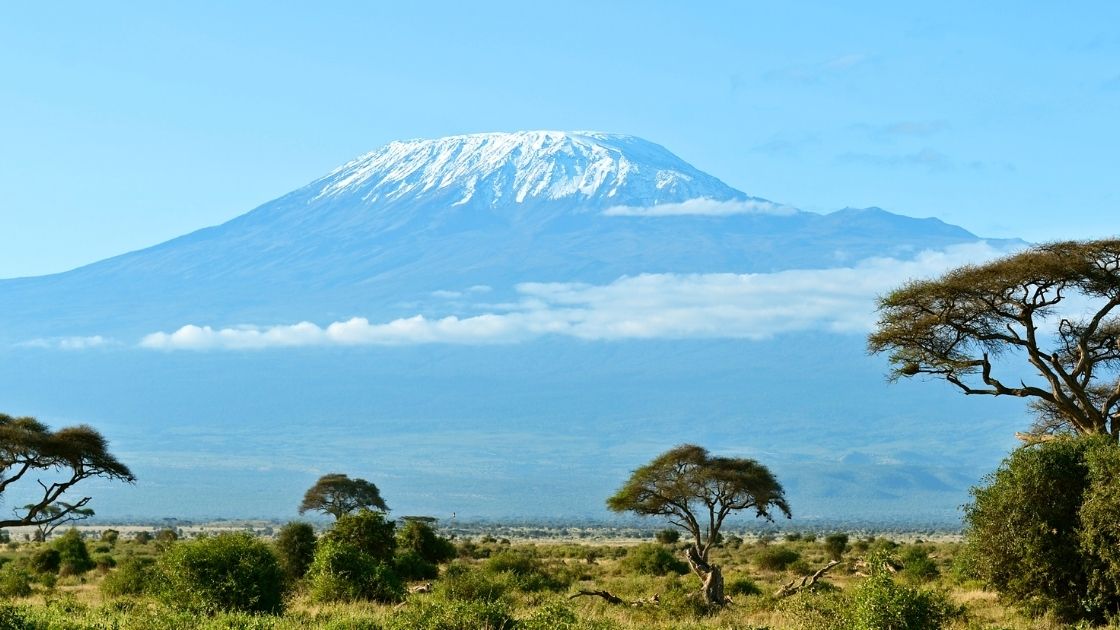
Picture elephants walking in front of Kilimanjaro’s snow-capped dome before 9 a.m. Amboseli National Park gets sold on two things: elephants and the mountain. What most planning articles skip is that they run on two different clocks, and mixing them up is how first-time visitors come home with a week of grey sky and average photos.
What Makes Amboseli National Park Different From Kenya’s Other Parks?
Amboseli sits about 240 kilometers southeast of Nairobi, a 4 to 5 hour drive, or a 30 to 45 minute charter flight from Wilson Airport. At 392 square kilometers, it’s small by Kenyan standards.
That size is deliberate. Amboseli is the protected core of a much larger ecosystem, roughly 8,000 square kilometers, shared with Maasai group ranches and community conservancies like Kimana and Selenkay. The wildlife doesn’t respect the park fence, and neither does the ecosystem that supports it.
The name itself tells you what to expect. “Amboseli” is Maasai for salty dust, and the dry lake bed at the park’s center is exactly that most of the year, a cracked, white expanse. What keeps the wildlife alive through it is the swamp system fed year-round by snowmelt and groundwater off Kilimanjaro. Without those swamps, none of this works.
The Two-Clock Rule and Why “Best Time to Visit” Is Actually Two Questions
Every Amboseli article tells you dry season is best. That’s true, but it answers only half of what you’re actually asking. Timing an Amboseli trip means managing two separate clocks, and they don’t run on the same schedule.
The Yearly Clock decides whether you get density or drama.
The Daily Clock decides whether you see the mountain at all.
Get the yearly clock right and miss the daily one, and you’ll have a week of elephants with no mountain behind them. Get the daily clock right and miss the yearly one, and you’ll be chasing scattered herds across flooded roads for a mountain view you get anyway.
The Yearly Clock: Density or Drama?
During the long dry season (June to October) and the short dry stretch (January to February), water disappears everywhere except the central swamps. Elephants, buffalo, and hippos concentrate around them in numbers you can predict and plan a game drive around. The trade-off: the landscape is dust-brown, not the lush green people picture.
The wet seasons, short rains in November, long rains March to May, turn Amboseli green and dramatic. It’s the more photogenic backdrop. But animals disperse across the wider ecosystem instead of clustering at the swamps, and Amboseli’s black cotton soil turns roads into a genuine problem after heavy rain. Some tracks become impassable for days.
There’s no wrong answer here, it’s a trade-off between guaranteed sightings and better light.
The Daily Clock and Why the Mountain Disappears by Lunchtime
Kilimanjaro builds its own weather. As the mountain heats through the morning, moist air rises and condenses into cloud around the peak, a pattern that repeats most days, in most seasons. By midday, the summit is often gone behind cloud that won’t clear until evening, if it clears at all.
The practical result: dawn is not a nice-to-have for Kilimanjaro photography. It’s close to mandatory. Guides who know Amboseli schedule the first game drive to start before sunrise specifically to catch the mountain clear, not just for the wildlife activity.
November through February gives you the best statistical odds of a full clear day. But even in August, a 6 a.m. drive will out-perform a 10 a.m. departure almost every time. Season affects your odds. Time of day affects them more.
The Elephants are the Best-Documented Herd on Earth
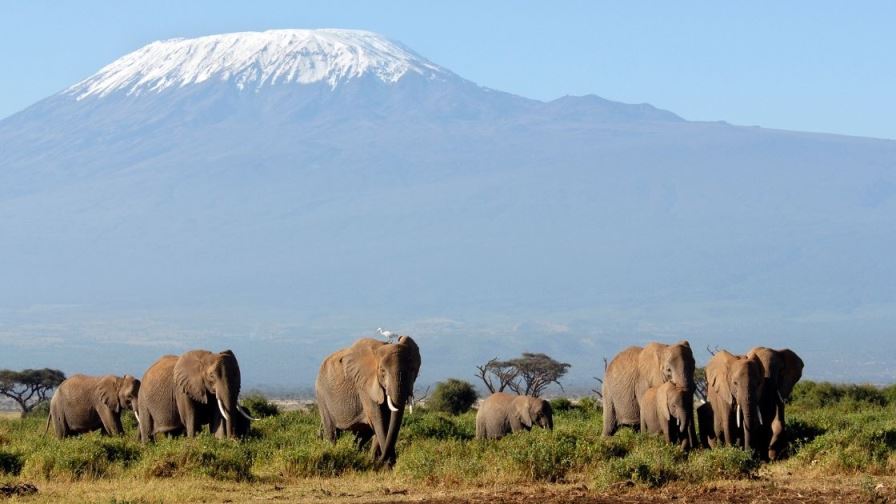
Amboseli holds an estimated 1,600 to 1,900 elephants, and that number alone makes it one of the best places in Africa to see them at close range. What most visitors never learn is why these particular elephants behave the way they do around vehicles, calm, habituated, unbothered by a Land Cruiser at 20 meters.
In 1972, researcher Cynthia Moss began what’s now the longest continuous study of any wild elephant population on Earth: the Amboseli Trust for Elephants. Every individual in the population has been identified, named, and tracked across generations by ear notches and family lineage.
Here’s the part that actually changes your trip: ask your guide which family you’re looking at. Amboseli guides are trained on this research and can usually tell you, whether this is the matriarch, this is her third calf, or this family lost a member to drought two seasons ago. A herd stops being “some elephants” and becomes a family you can follow. That’s not something you get from a generic savanna sighting, and it’s not something most tour operators think to mention up front.
Where You Sleep Decides Half Your Photos
Lodge position in Amboseli isn’t a minor detail, but it determines your angle on the mountain and your distance from the swamps where wildlife concentrates. Properties on the park’s western and southwestern side, closer to the swamp system and facing Kilimanjaro directly, get a cleaner sightline than those tucked further east.
Established accommodation options include Ol Tukai Lodge and Amboseli Serena Safari Lodge inside the park boundary, and Tortilis Camp and Tawi Lodge on private conservancy land just outside it, which also means fewer vehicles at your sightings.
Conservancy-based stays carry one more advantage worth knowing: night drives and walking safaris, both banned inside the national park itself but permitted on the surrounding community land.
Getting There, and What to Pair It With
Road from Nairobi runs via Namanga or via Emali and Kimana, both 4 to 5 hours depending on traffic and which gate you’re entering through. Flying cuts that to under an hour on scheduled services from Wilson Airport.
Amboseli pairs naturally with two kinds of trips. Combine it with Tsavo West for a southern-circuit safari, or with the Maasai Mara for the classic two-park itinerary, commonly three nights in each, linked by road via Naivasha or a short charter flight. For travelers already thinking beyond Kenya, the same swamp-and-savanna appetite that draws people to Amboseli tends to draw them toward Rwanda’s gorilla trekking next, and the two combine well on one trip through the East Africa Tourist Visa.
See these Safaris:-
- 3 Days Tsavo East, Saltlick, Amboseli
- 4 Days Tsavo East, West, Amboseli, ending in Diani/Mombasa
- 6 Days Amboseli, Maasai Mara by Flight
See our Amboseli Safari Packages Full timing breakdown →
Where Amboseli Falls Short (And Why That’s Fine)
Amboseli is not the Serengeti. The plains-game variety is thinner, the park is small enough that peak-season traffic at popular swamp viewpoints is a real thing, and if wide-open, empty-horizon wilderness is what you want, the Mara or Tsavo will deliver it better.
What Amboseli trades that space for is certainty and intimacy: a near-guaranteed elephant encounter, a level of individual-family knowledge from your guide that larger parks can’t match, and, on the right morning, the single most recognizable backdrop in African safari photography.
Time Your Amboseli Trip Around Both Clocks
Most Amboseli itineraries get built around season alone, which is why so many travelers land during the “right” months and still miss the mountain. A trip built around both the yearly clock and the daily clock, the right season, paired with dawn game drives scheduled to catch Kilimanjaro before the cloud builds, is a different trip entirely.
That’s the kind of itineraries we build at GoKenyaSafari: private, guided Amboseli safaris timed to both clocks, paired with the Mara, Tsavo, or a Rwanda extension if you want to go further.
Tell us your travel window and we’ll tell you honestly whether it’s a density trip or a drama trip, and how to schedule the drives either way to get your Kilimanjaro shot.
Frequently Asked Questions
What is the best time to visit Amboseli National Park?
For wildlife concentration, the dry months, June to October and January to February, are best, since animals cluster around the permanent swamps. For the clearest Kilimanjaro views, November through February gives the best odds, though dawn game drives improve your chances in any month.
How many days do you need in Amboseli?
Two nights gives you two dawn game drives, which is the minimum for a real shot at both wildlife and a clear Kilimanjaro view. Three nights builds in margin against a cloudy morning or two.
How much are Amboseli National Park entry fees?
Non-resident adult fees have historically run in the $60–90 per person, per day range, but a 2026 KWS rate increase to premium-park pricing is currently under court review in Kenya, so the exact figure is unsettled.
How far is Amboseli from Nairobi?
About 230–240 kilometers, a 4 to 5 hour drive by road, or a 30 to 45 minute flight from Wilson Airport.
Can you always see Mount Kilimanjaro from Amboseli?
No. Cloud builds around the peak most afternoons regardless of season, and the wet season (March–May) reduces visibility further. Early morning, before roughly 9 a.m., is consistently the clearest window.